
The second day of the conference started out with paper presentations. Some of the highlights included Citizen Science in an Urban Meadow (visitors at the Saint Louis Zoo using iNaturalist to measure biodiversity in their native meadow), Project PRAIRIE — Pollinators go to School (an education initiative from the Toledo Zoo that installs native prairies on school campuses), and Future Middle School Science Teachers’ Emotions and Beliefs Toward Cockroaches (a study of how activities with hissing cockroaches affected future teachers’ feelings toward them and the likelihood of including cockroaches in the science classroom).
During breaks, participants were encouraged to peruse the exhibit hall and vendors. And my, what eye candy there was to be seen! BioQuip had a series of tables set up, selling beautifully pinned insect specimens, collecting supplies, live arthropods, and plenty of books and educational materials.


The sheer number of spiders, millipedes, centipedes, and beetles for sale was a little overwhelming! There were perhaps five or six vendors selling live critters, and over the course of the conference I helped myself to a tailless whip scorpion (Paraphrynus mexicanus), vinegaroon (Mastigoproctus giganteus), and two blue death-feigning beetles (Asbolus verrucosus).
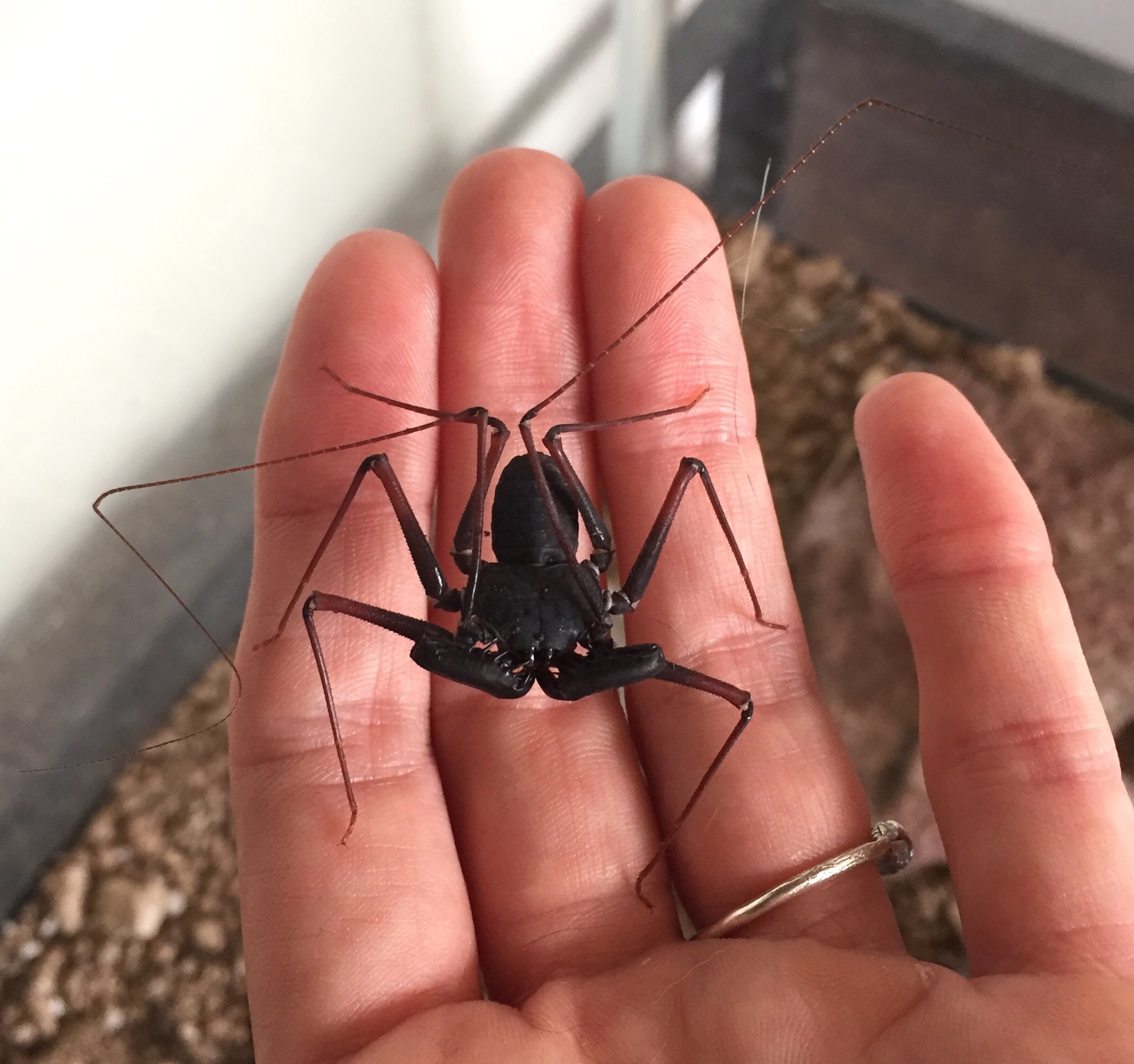
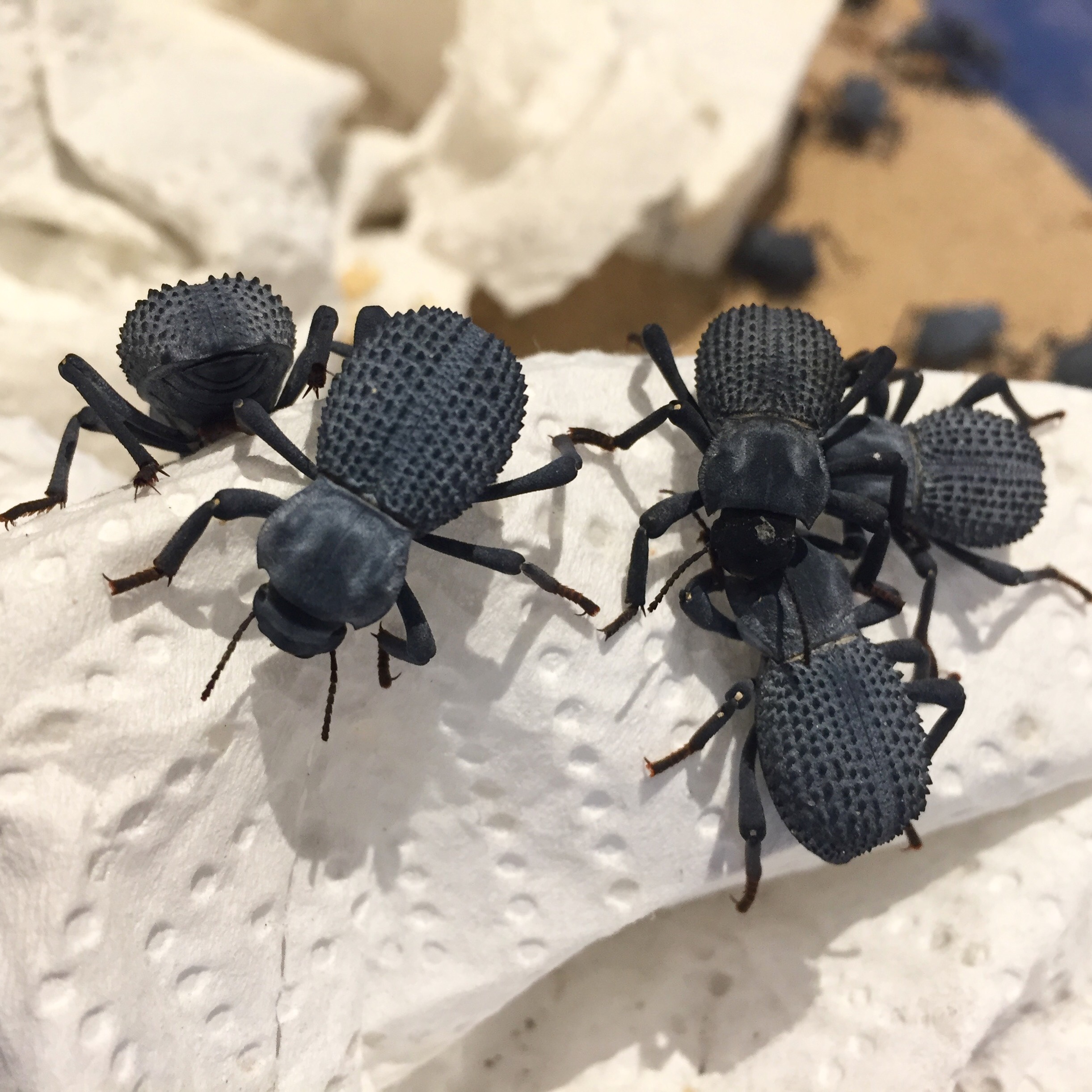
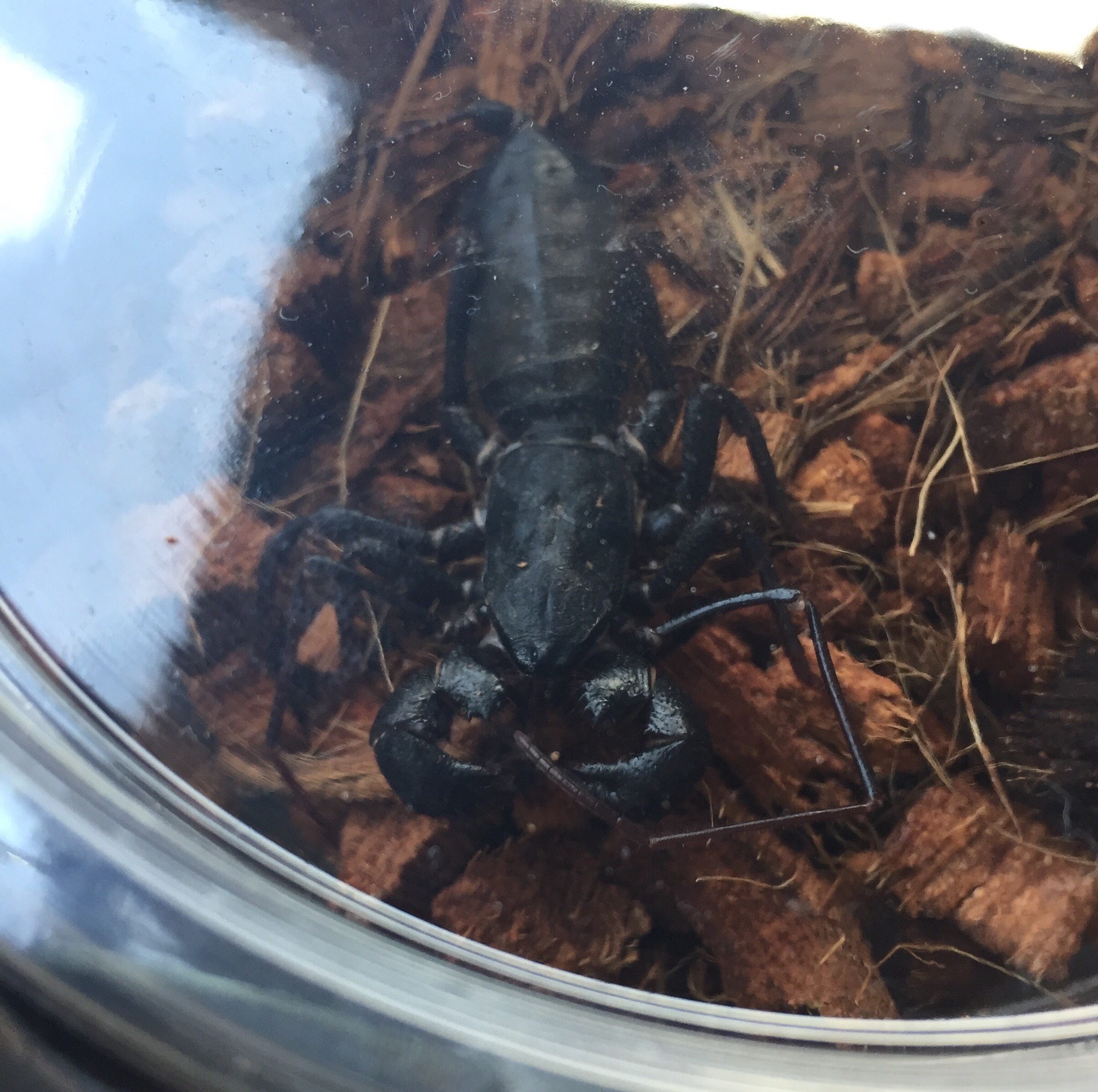
(An interesting side note — when I was in fifth grade, we had a pet vinegaroon. It had crawled out of a shipment to a factory in Michigan, and was subsequently delivered to my father at U of M. I think several of our more interesting pets came to us this way.)
Other invertebrates for sale:
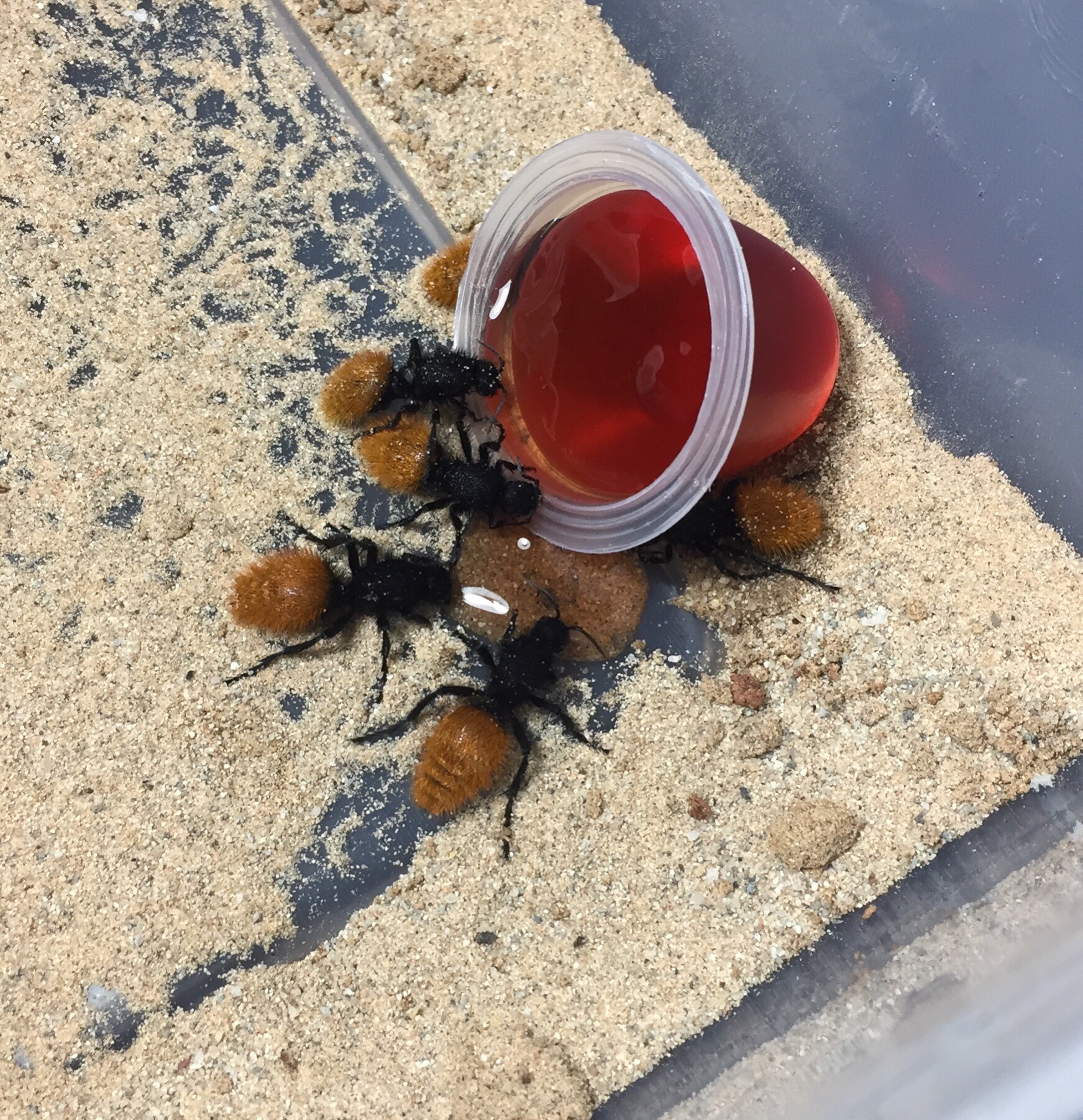
Velvet ants: not the kind of bug you want to hold. 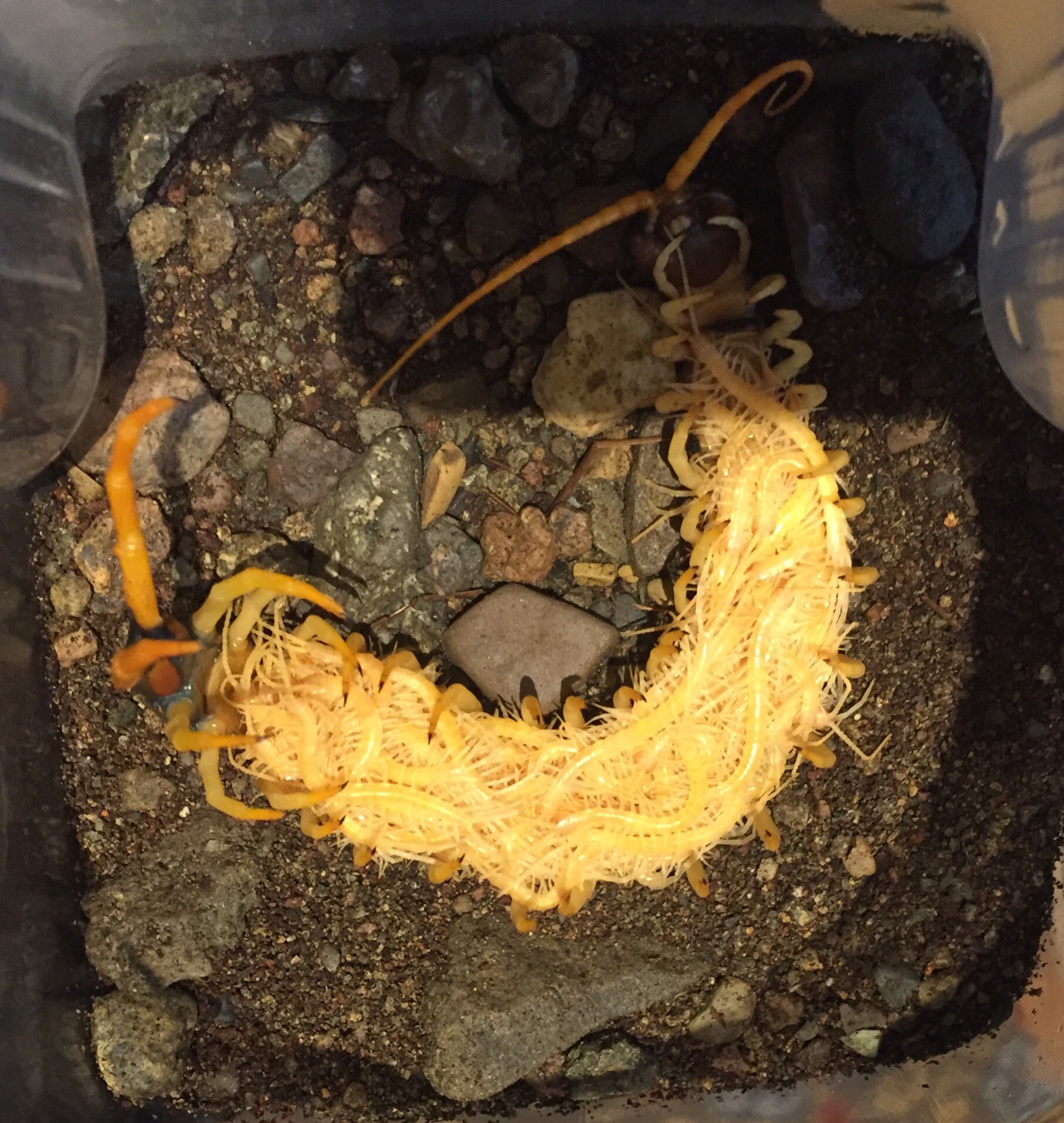
She wasn’t for sale, but this Scolopendra heros was tending to her clutch of babies. 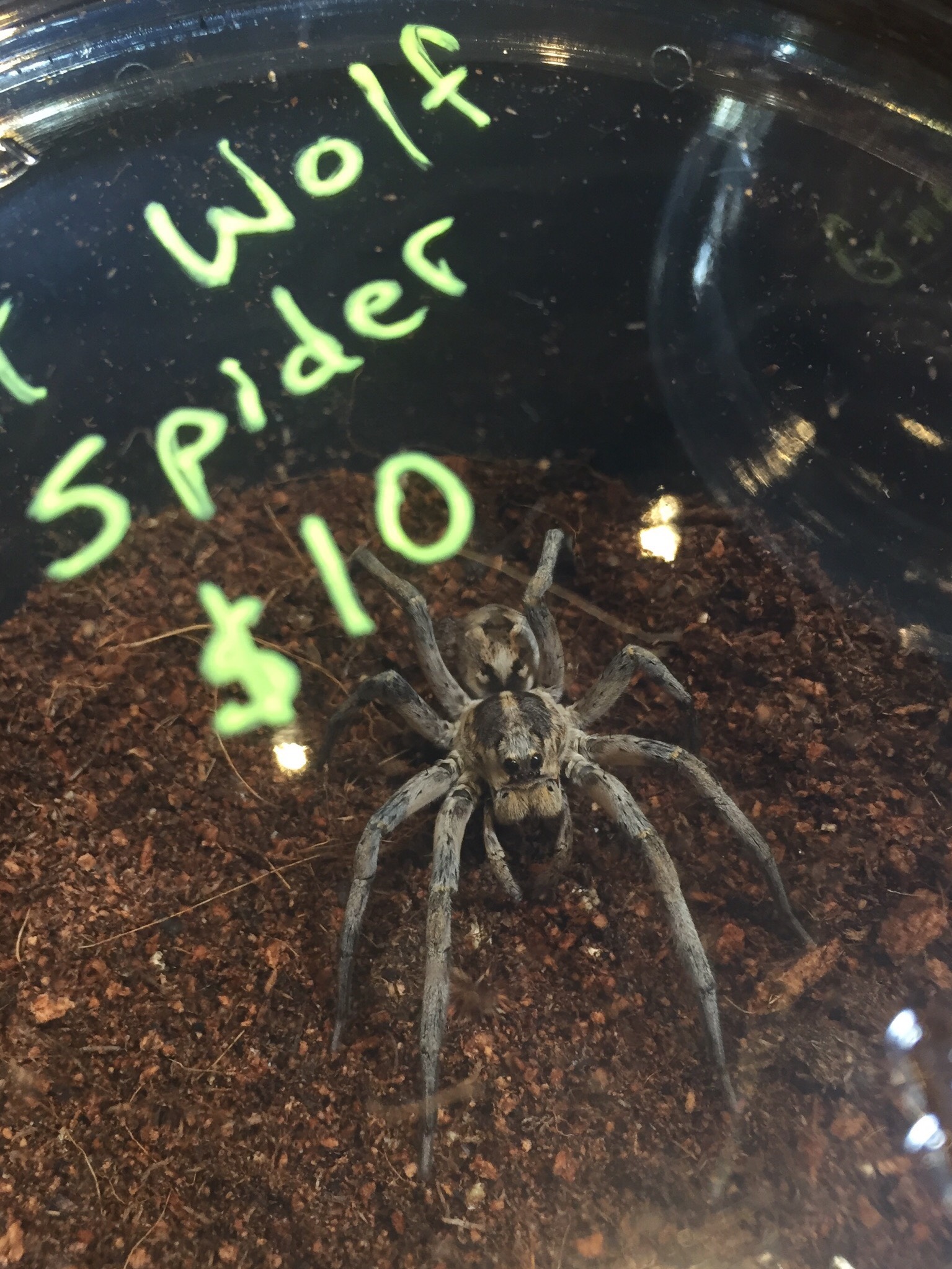
There were many Hogna carolinensis for sale. 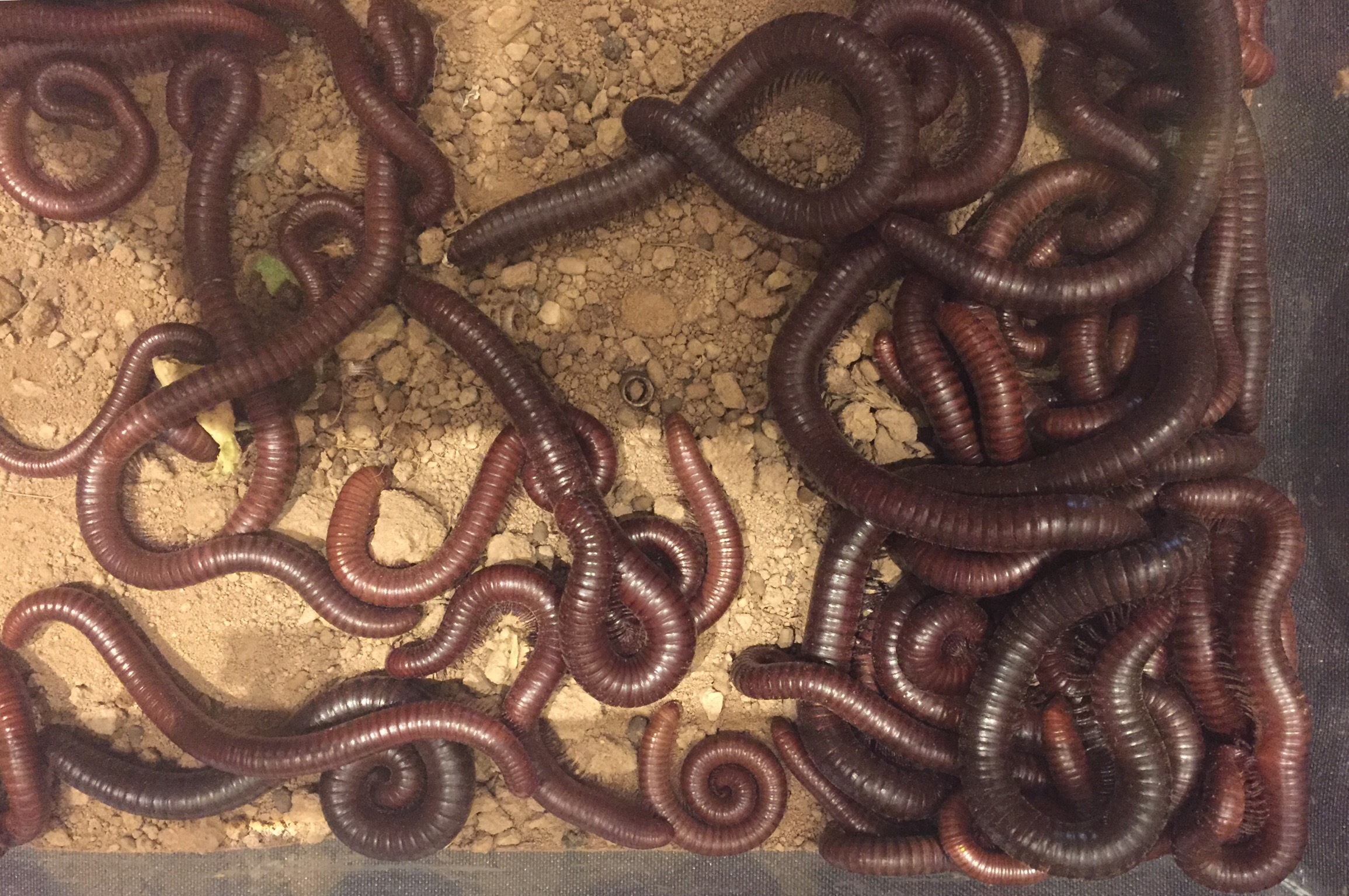
Desert millipedes! I was sorely tempted to purchase one as a companion for ours at home, but I resisted.
The real event of the day, though, was the blacklighting field trip to Peppersauce Canyon in the Catalina Mountains! We departed at around 6 PM and made our way north past Saddlebrooke. Then began our drive up a winding dirt road — as it turns out, the northern portion of the Mount Lemmon Highway. Were we to continue taking it, we would have eventually reached Summerhaven at the top of Mount Lemmon. We stuck to a lower elevation, though, and as the sun sank lower into the sky, the desert landscape was bathed in the most beautiful golden light. At one point, I spotted a coues whitetail deer, his velvet antlers lit from behind, simply glowing in the sun.
At last we reached the Peppersauce Campground, and it was very nearly dark. The sheets and lighting equipment had been set up before our arrival, and there was another fellow with a setup as well. He was unaffiliated with the conference, but was a fellow bug enthusiast, and he was very generous in letting us collect from his light! It had rained earlier in the day, and the ground and foliage was wet. It was a perfect temperature and, once again, miraculously there was not a single mosquito to be seen.
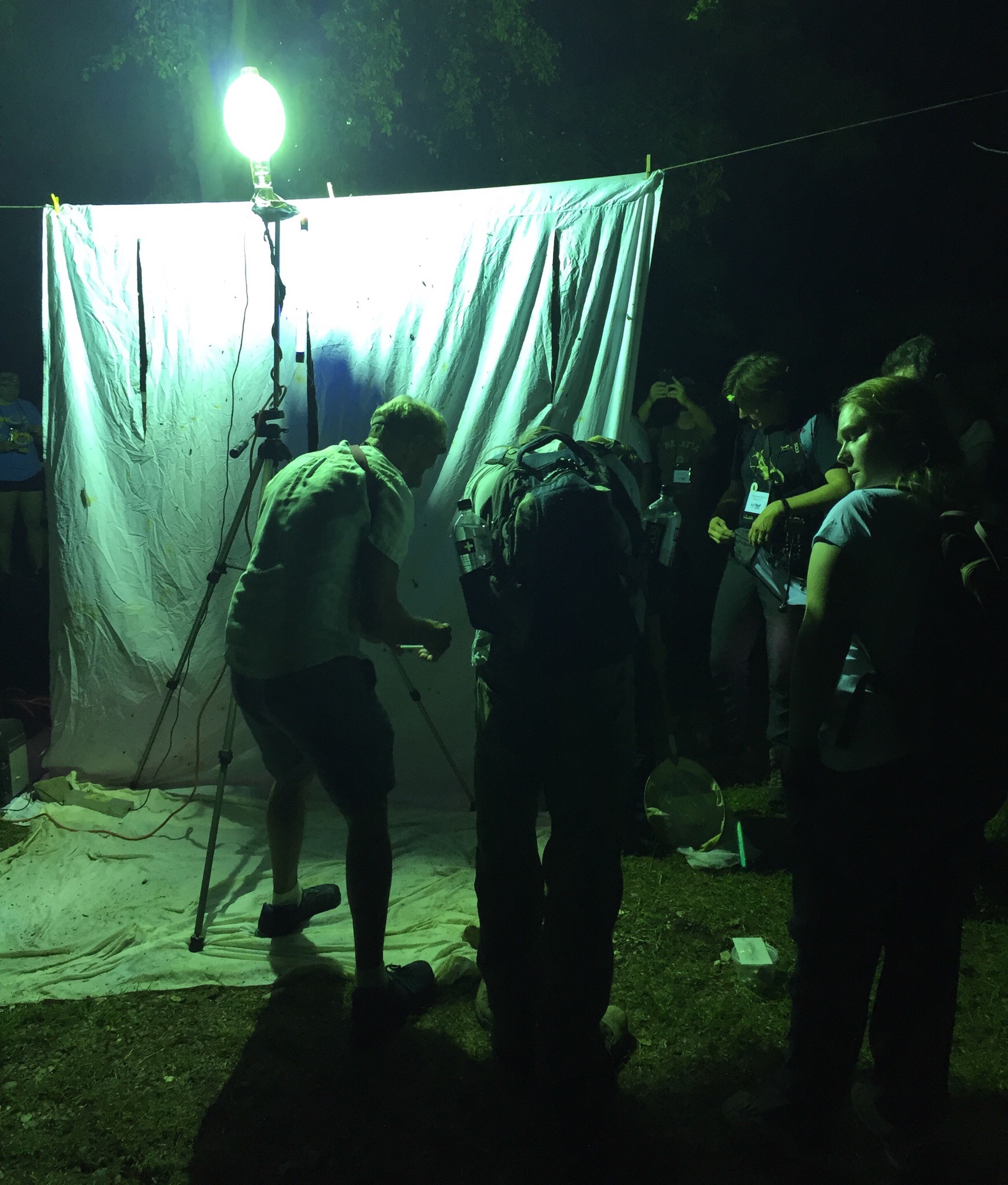
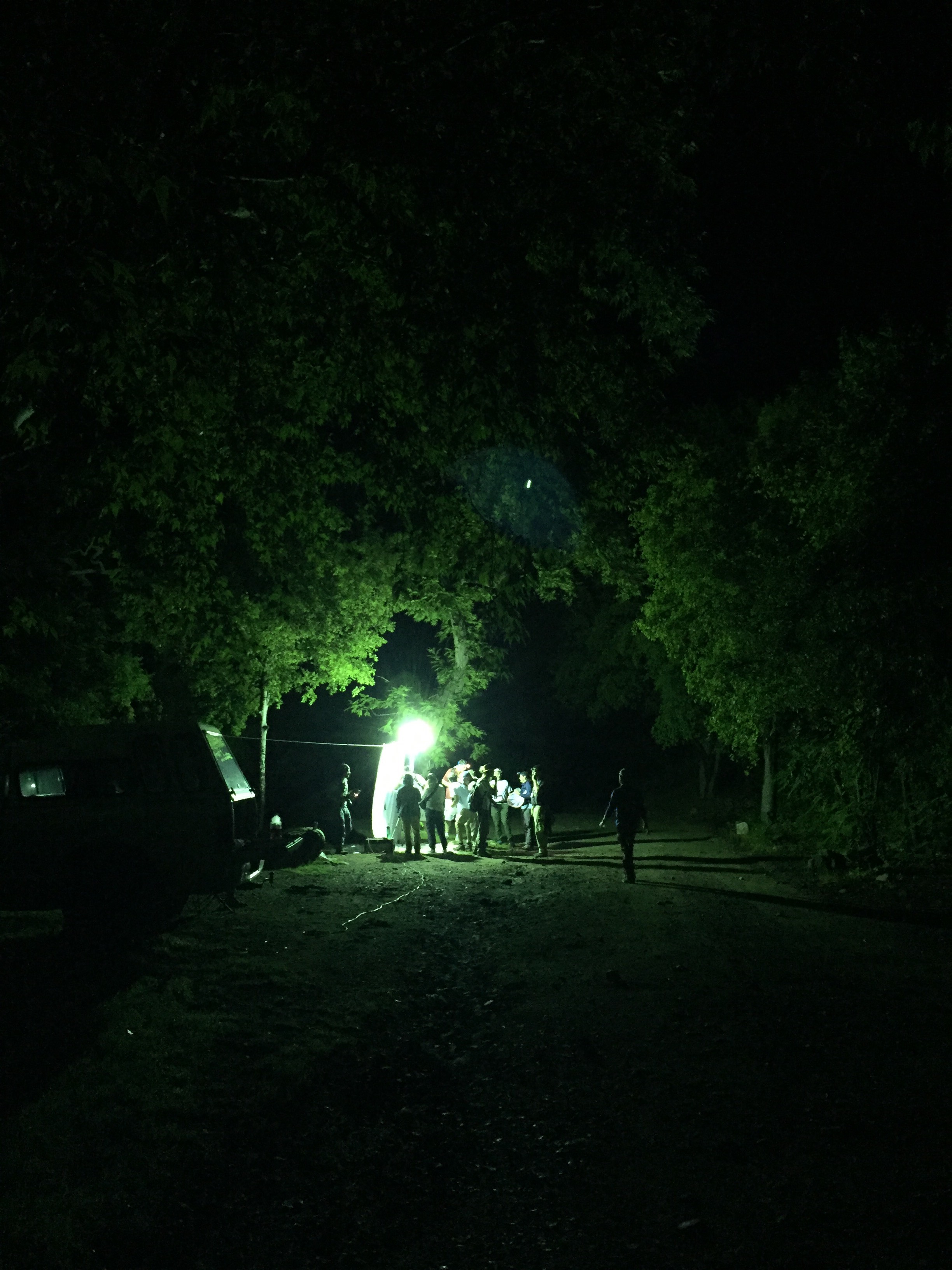
There’s something very enchanting about blacklighting. It’s exciting, and a bit addictive, and there’s such a strange contrast between the brightness of the lights and the darkness of the surrounding forest. As the moths and beetles started to appear, we too began to congregate around the lights.
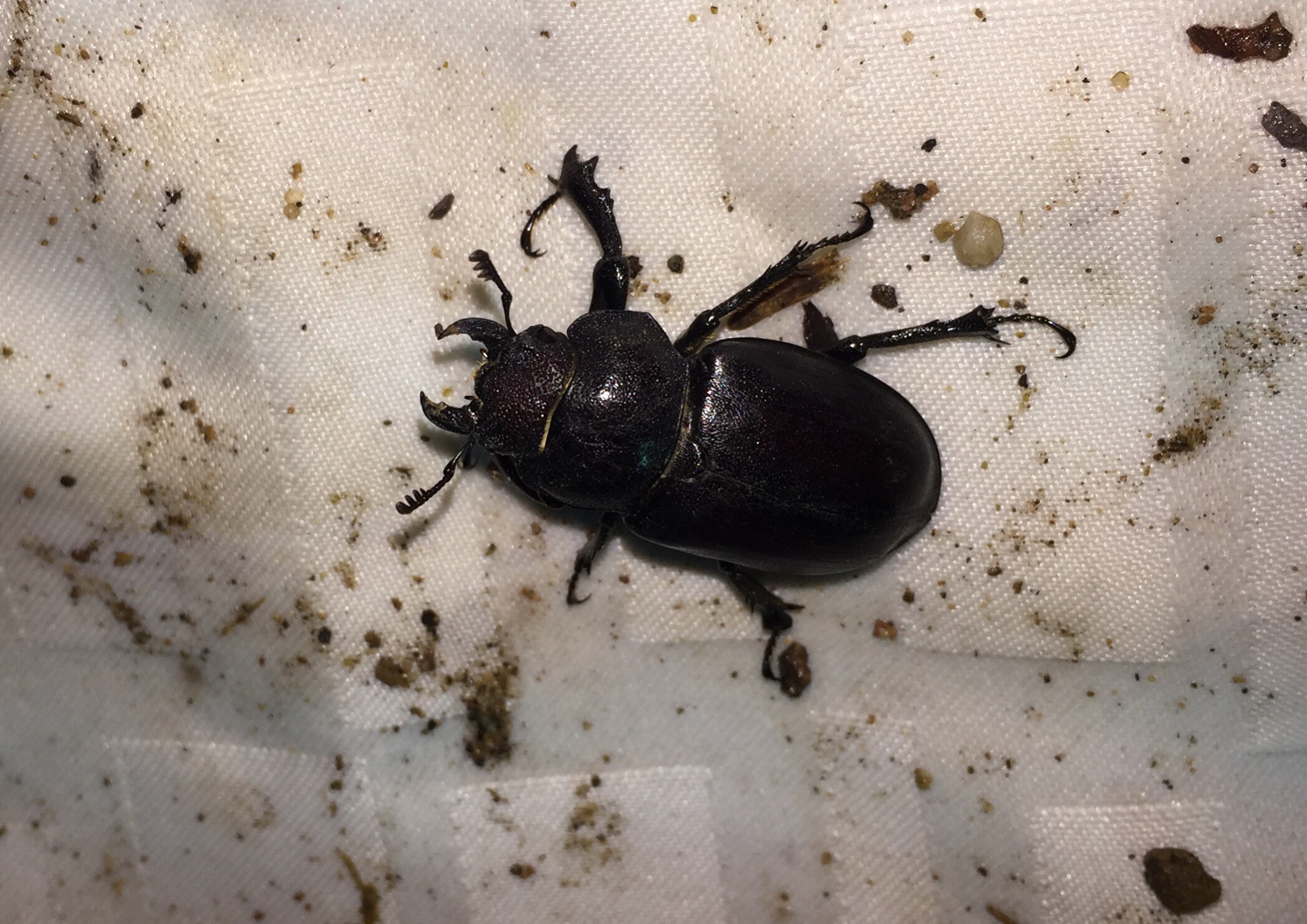
Lucanus mazama 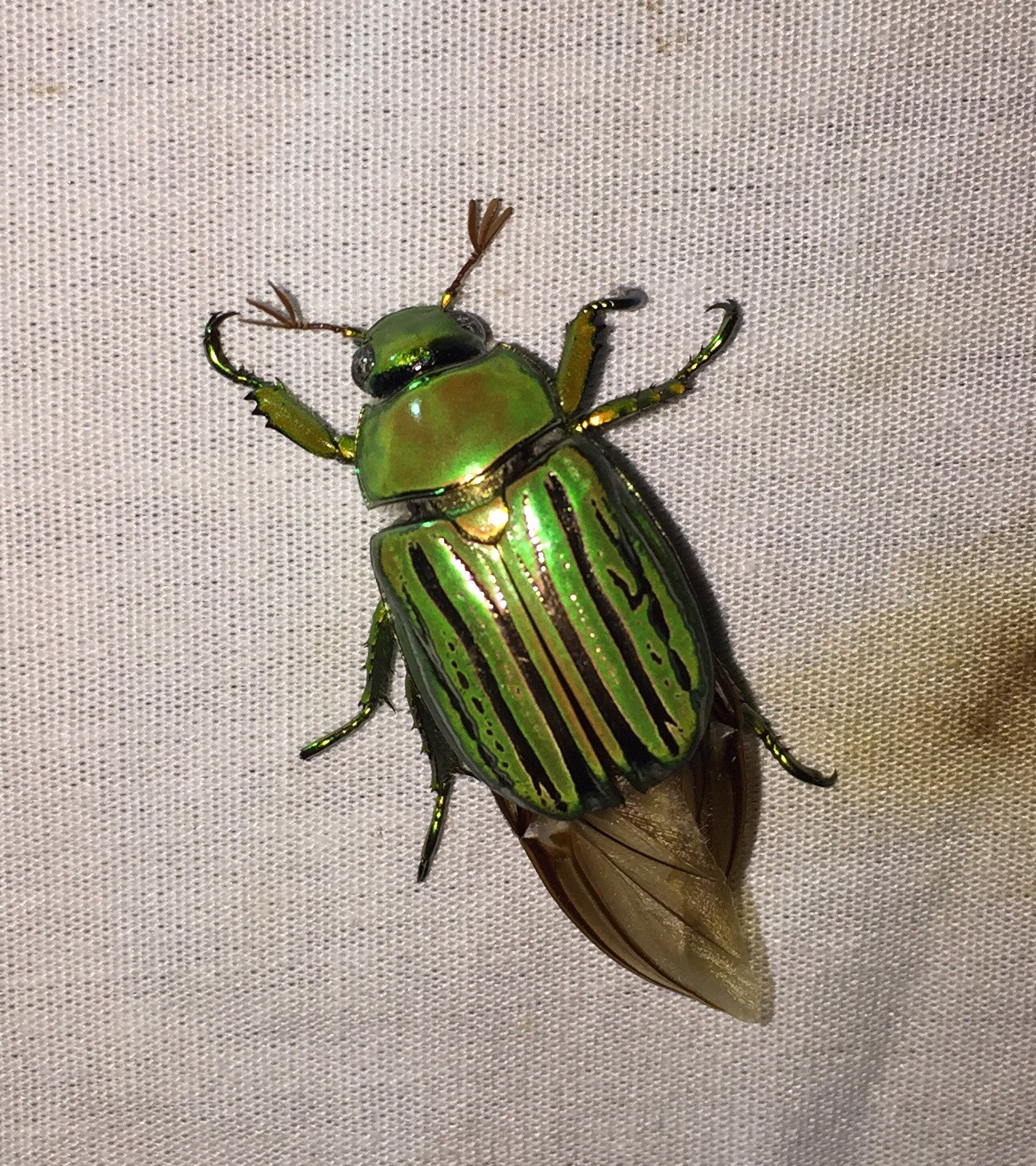
Chrysina gloriosa — one of the most beautiful beetles I have ever seen. And dozens of them came to our lights! 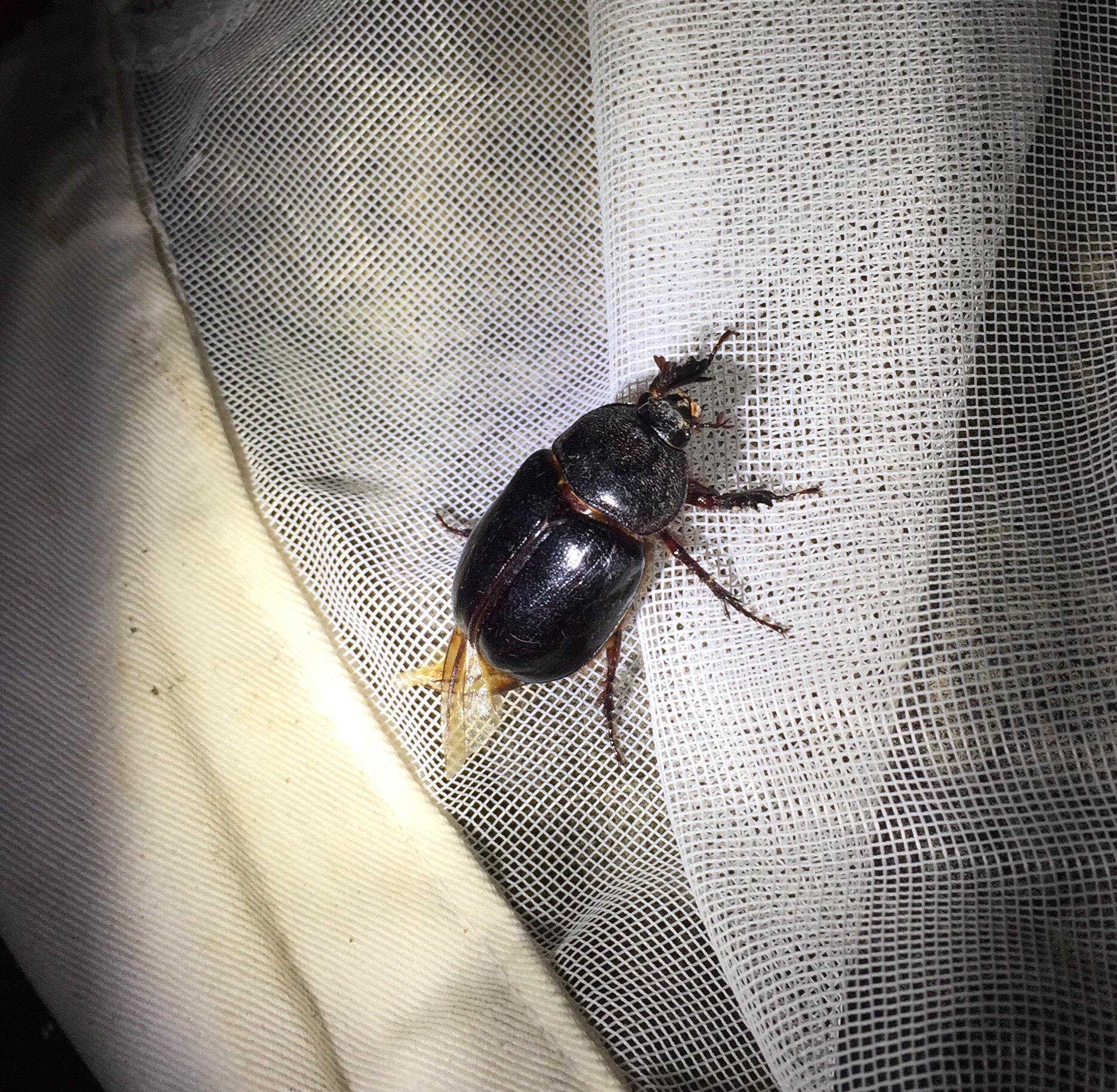
A species of scarab in the genus Strategus. They were quite numerous.
The variety of beetles that came to the lights was delightful. Chrysina gloriosa was a common visitor, but was simply stunning in its beauty. We saw a handful of different Strategus sp., and plenty of smaller scarabs. Other beetle finds included small Cerambycids and tiger beetles.
Not to be outdone by the Coleoptera, the moths put on quite a show, too. The sphinx moths and silk moths started to really appear about an hour in.
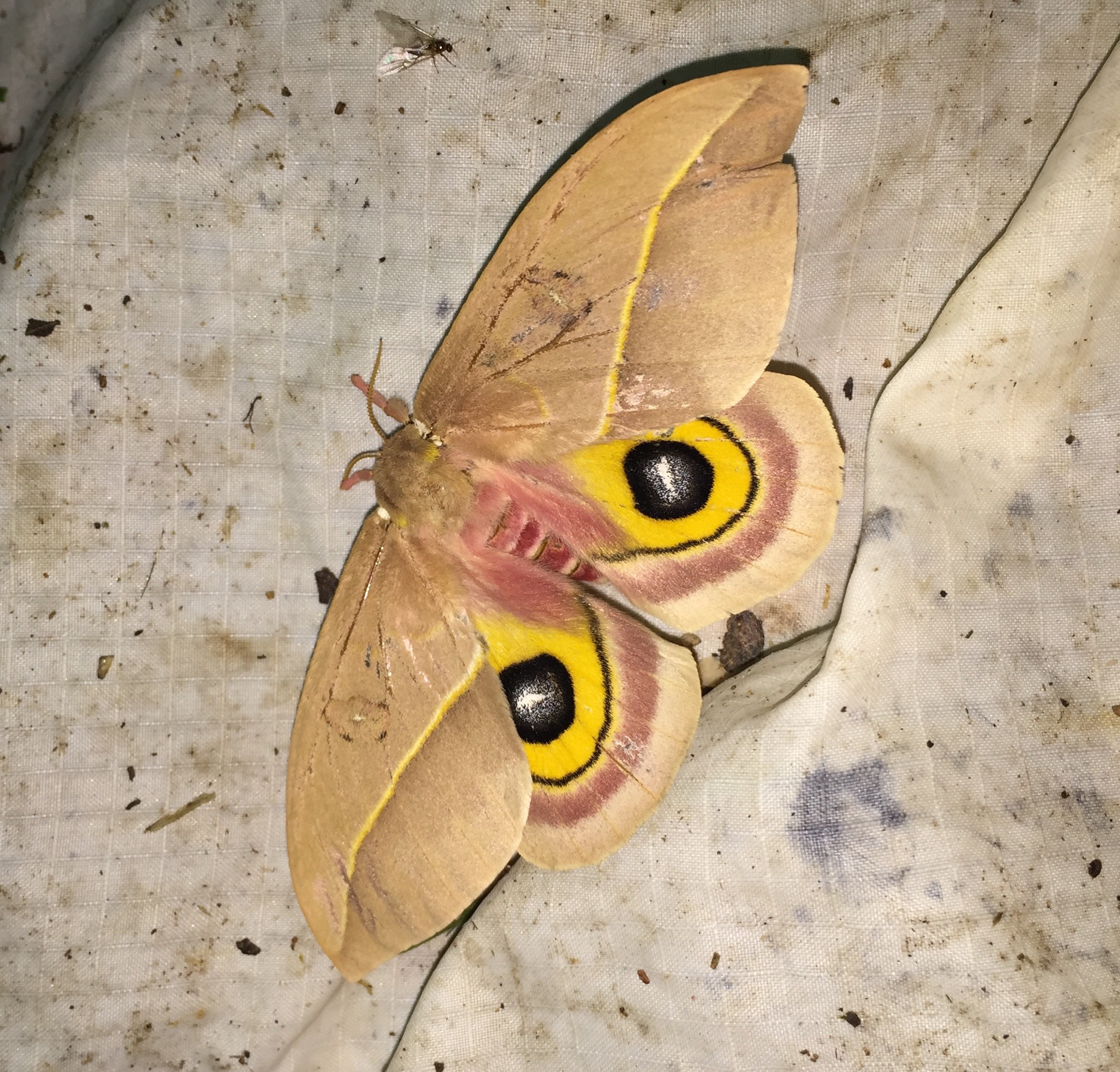
Automeris cecrops panima — I collected both a male and female of this species. 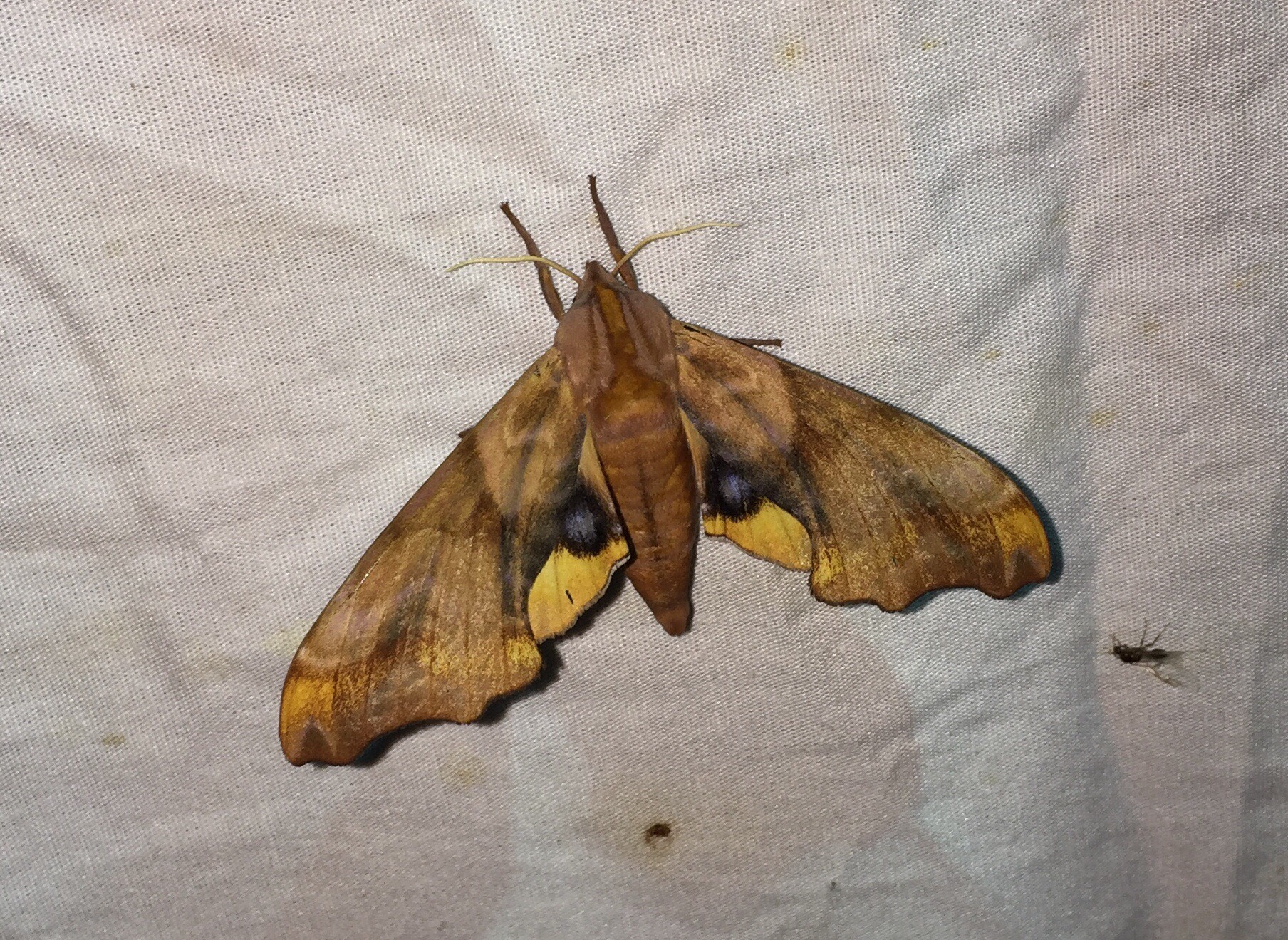
A familiar moth, Paonias myops. These were a common sight in Marquette, MI. 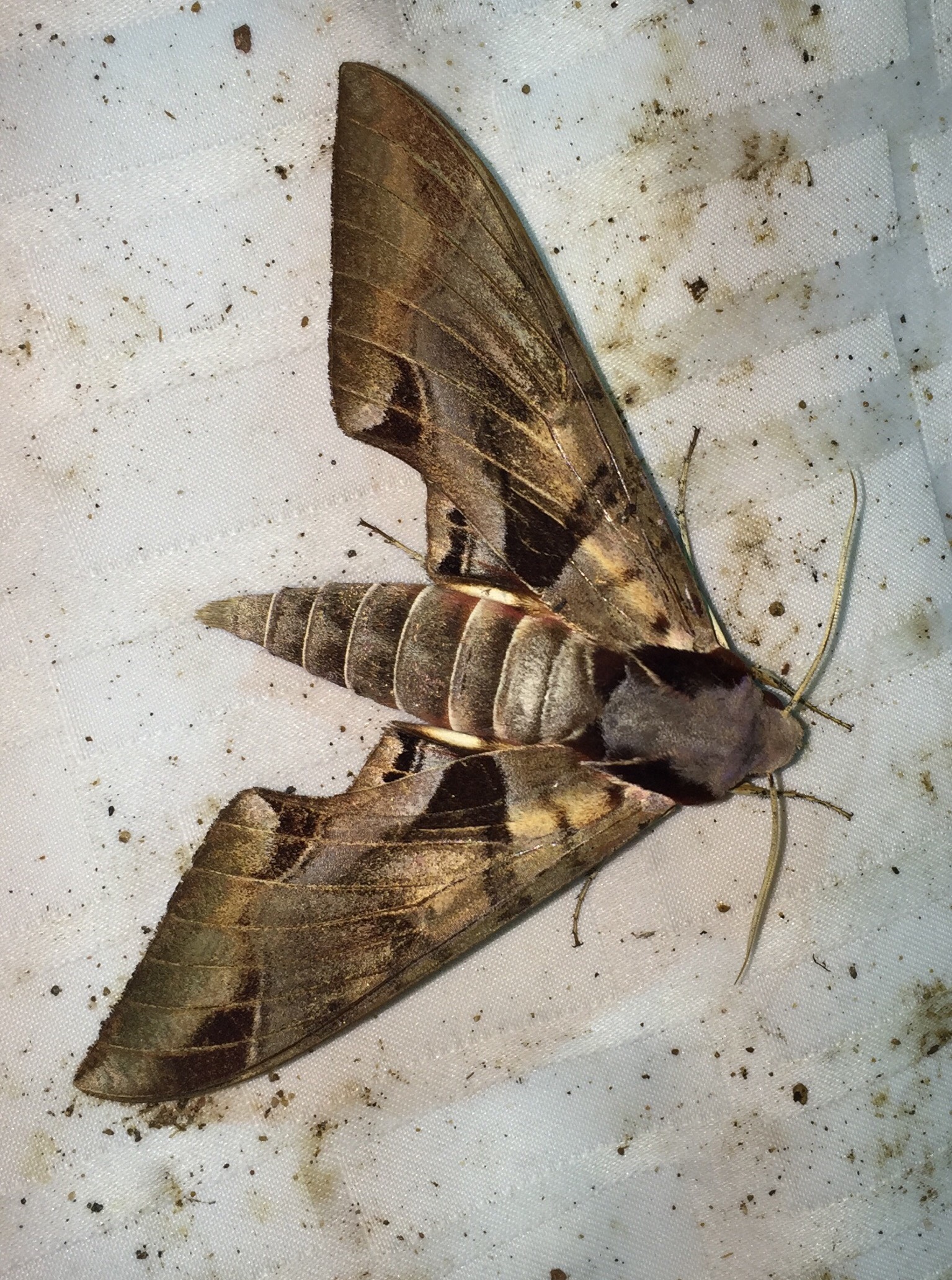
Eumorpha typhon, a very large sphinx moth. 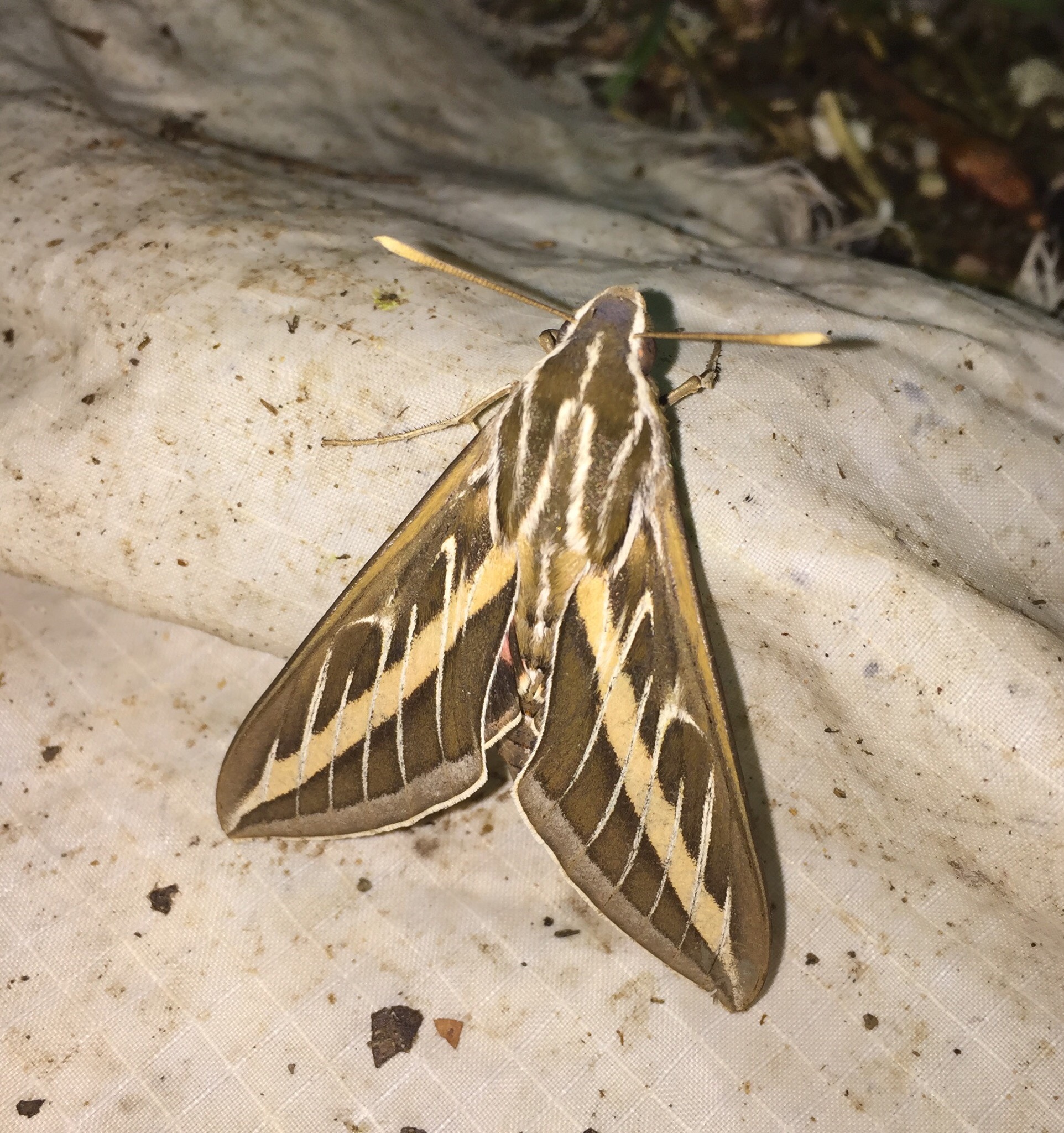
Hyles lineata, the white-lined sphinx. 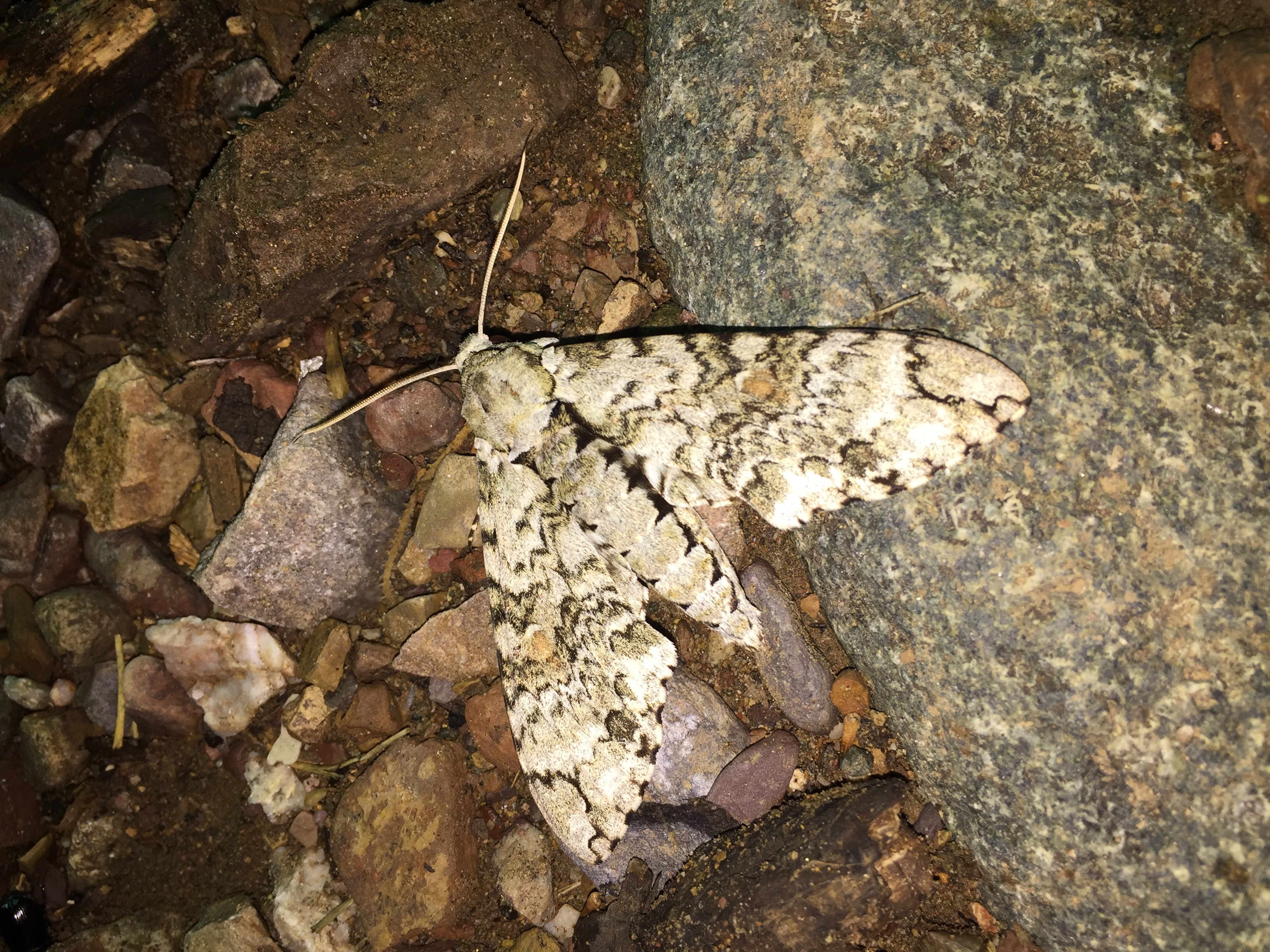
Some species of Manduca, though I’m not positive which.
There were a number of interesting Neuroptera, including an owlfly and the lovely Glenurus luniger antlion.
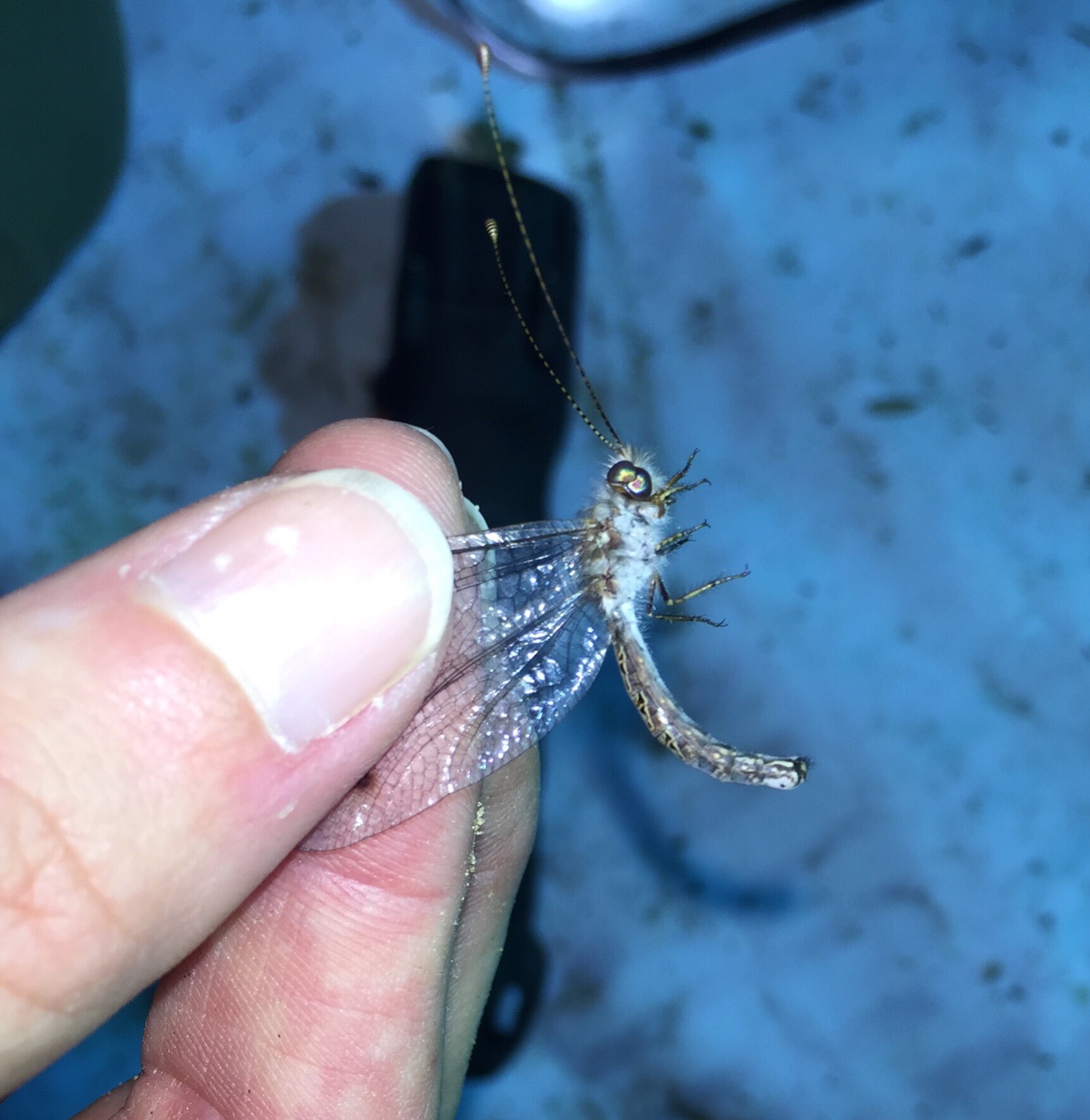
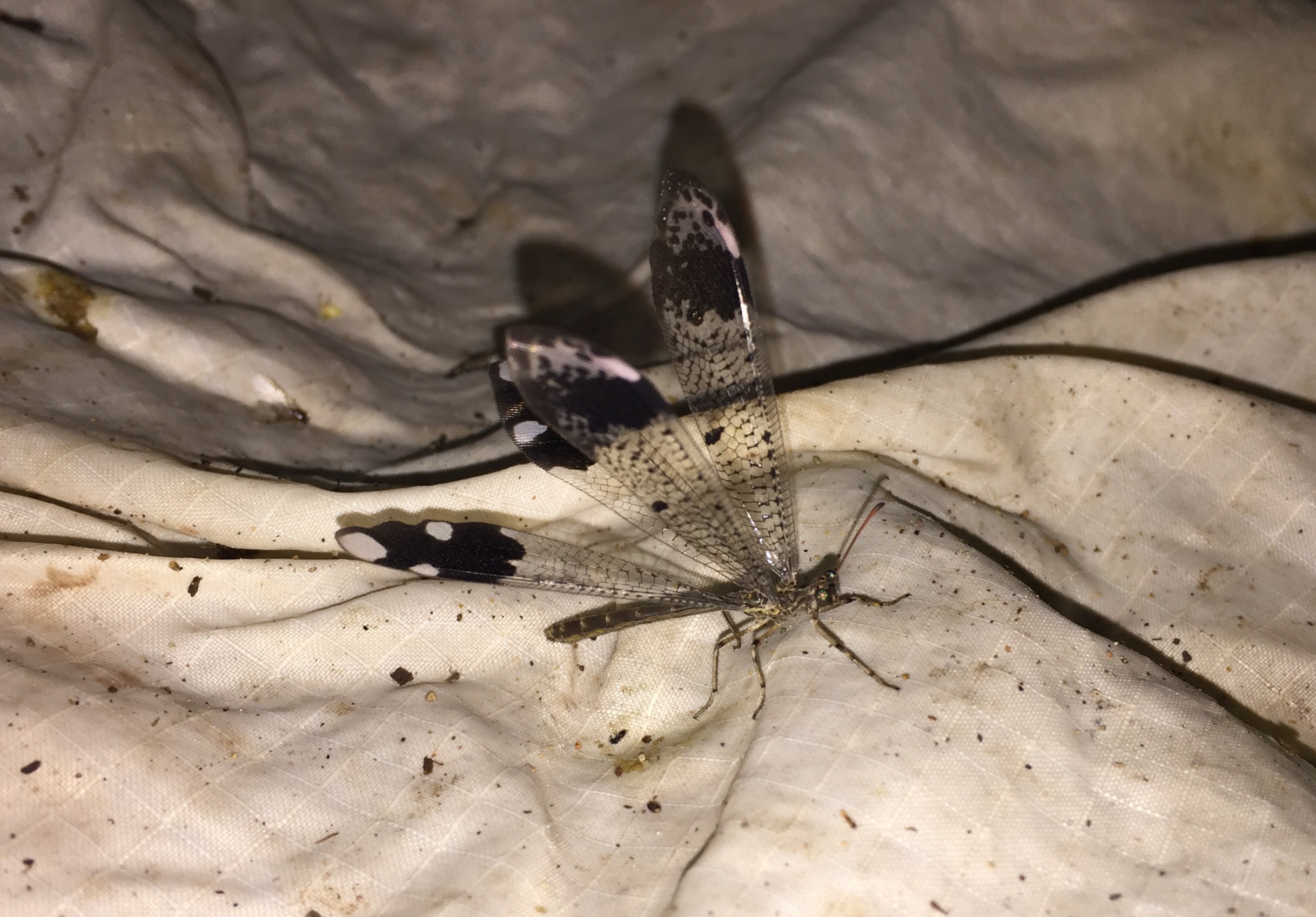
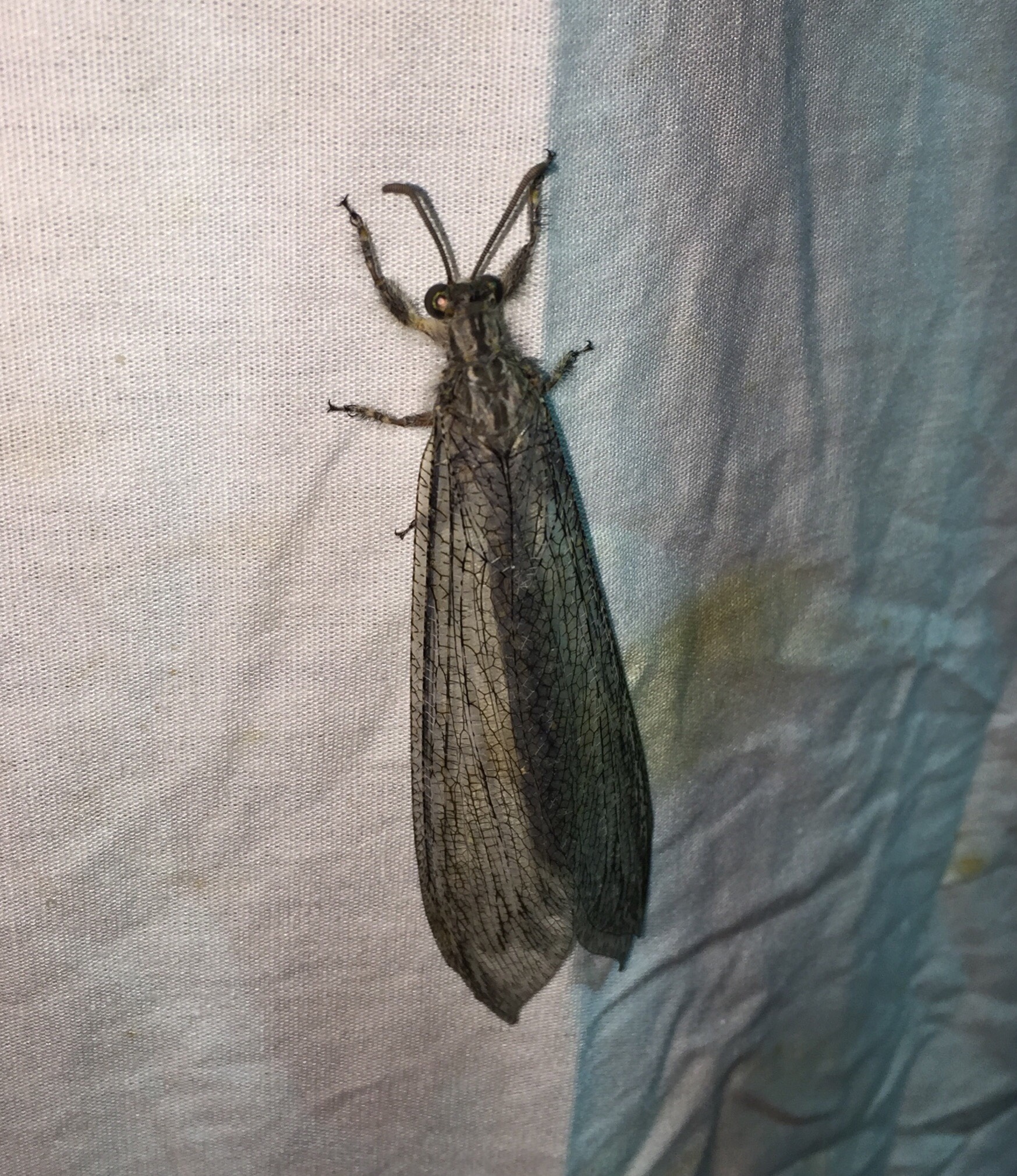
Vella fallax, a large and fuzzy antlion.
And, of course, there were a couple of neat spiders that wandered to the sheets, as well.
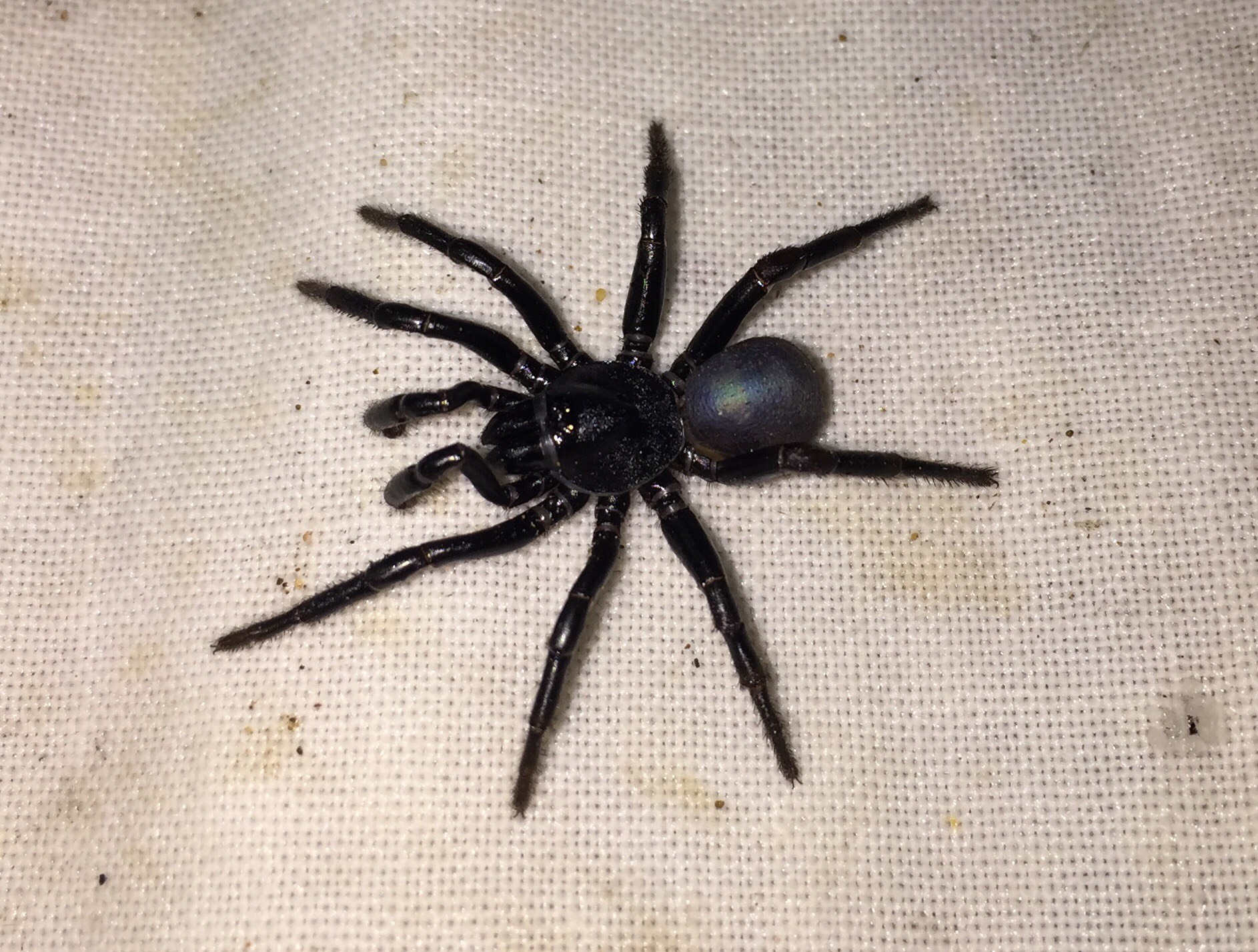
A cork-lid trapdoor spider, Ummidia sp. 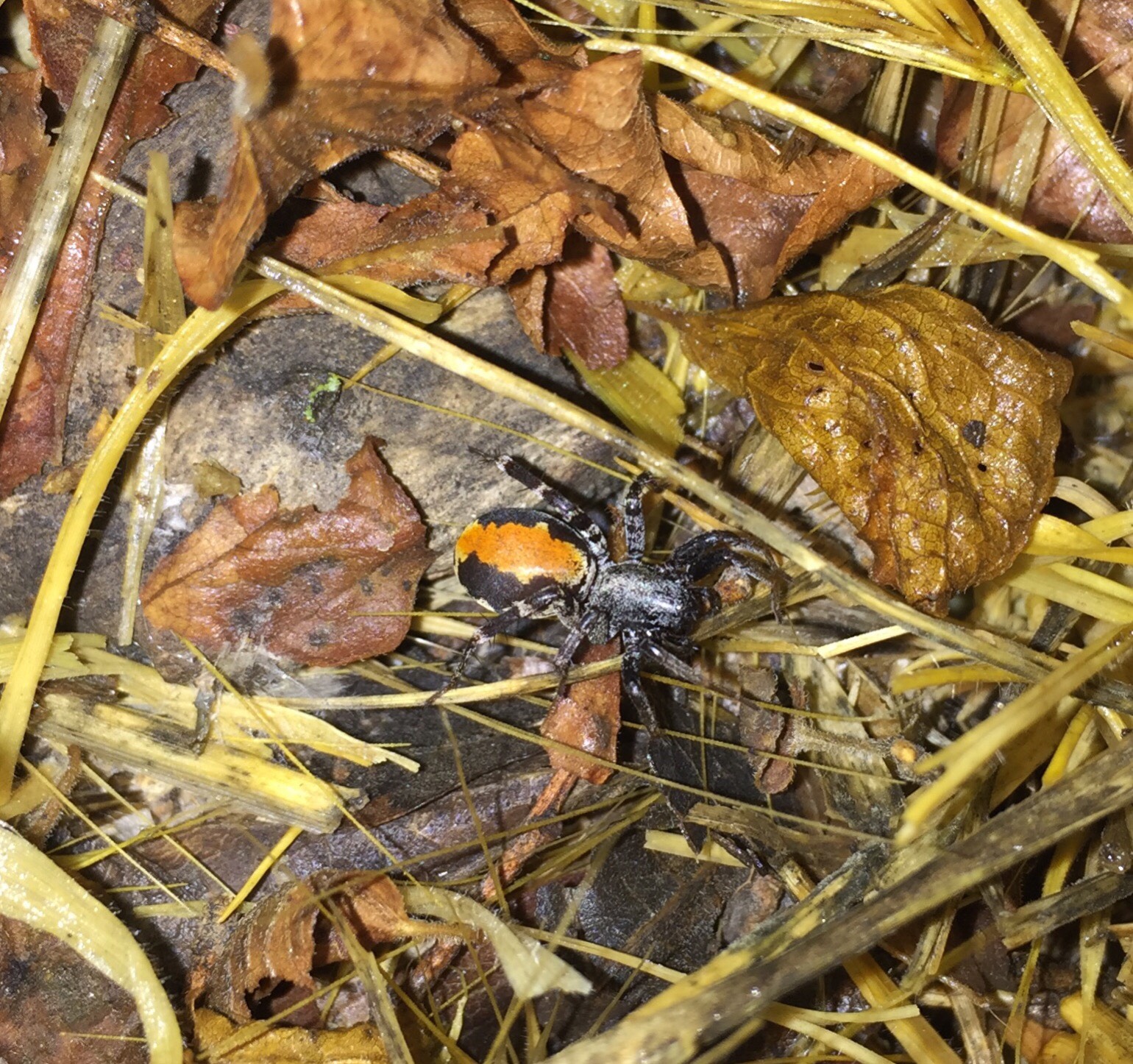
What appears to be a female Castianeira dorsata. What a beauty!
It was a late night, and I don’t think I got home until nearly 1 AM, but I had so much fun! And then, I had to wake up bright and early for day three of the conference, which I will detail in my next post: IECC 2019: Part Three!

 Bug Talk