
I’m always amazed at how diverse and plenty the jumping spiders are here. They seem to be lurking everywhere — in the desert broom, on the ribs and spines of cacti, amongst the leaves on the crossvine, and on the walls of the house, both inside and outdoors. Most of the species I’ve encountered here are relatively small, certainly smaller than the Phidippus audax and Phidippus purpuratus I’d see in Michigan. Smaller size aside, Arizona jumping spiders are colorful, with striking patterns and hues not only on their bodies, but often on their legs, pedipalps, and chelicerae.
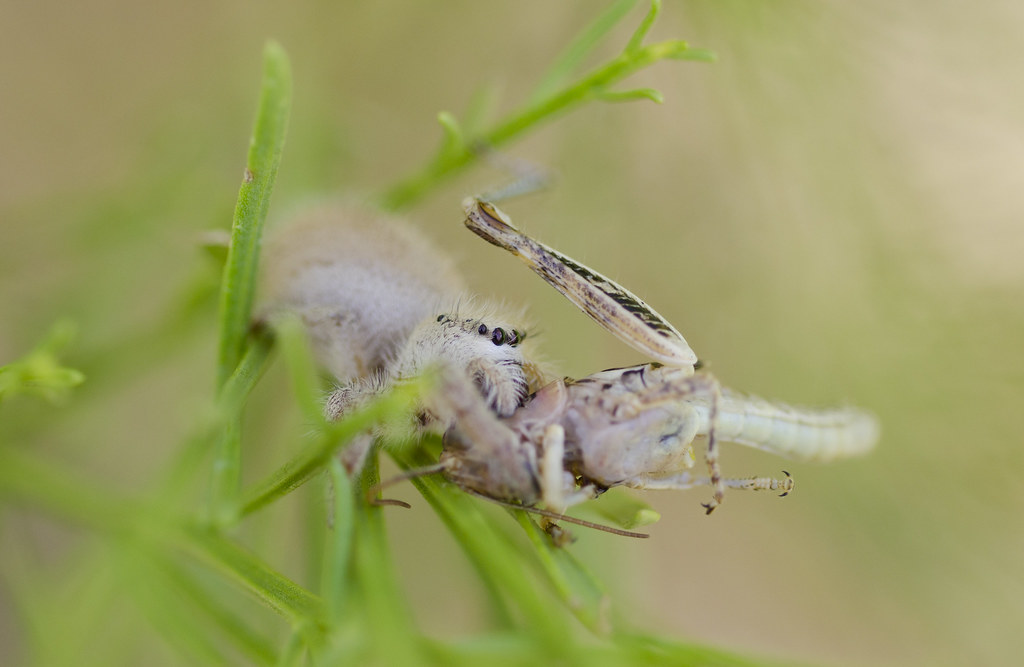
Salticidae is the largest group of spiders on the planet. Nearly 150 species, if not more, inhabit the Southwest. Identifying them can be a challenge, especially sub-adult specimens. Many Phidippus species, for example, exhibit a very similar color pattern on their abdomens as juveniles. It’s very likely that the photographs of various P. carneus that I’ve posted here could be P. californicus or P. insignarius.


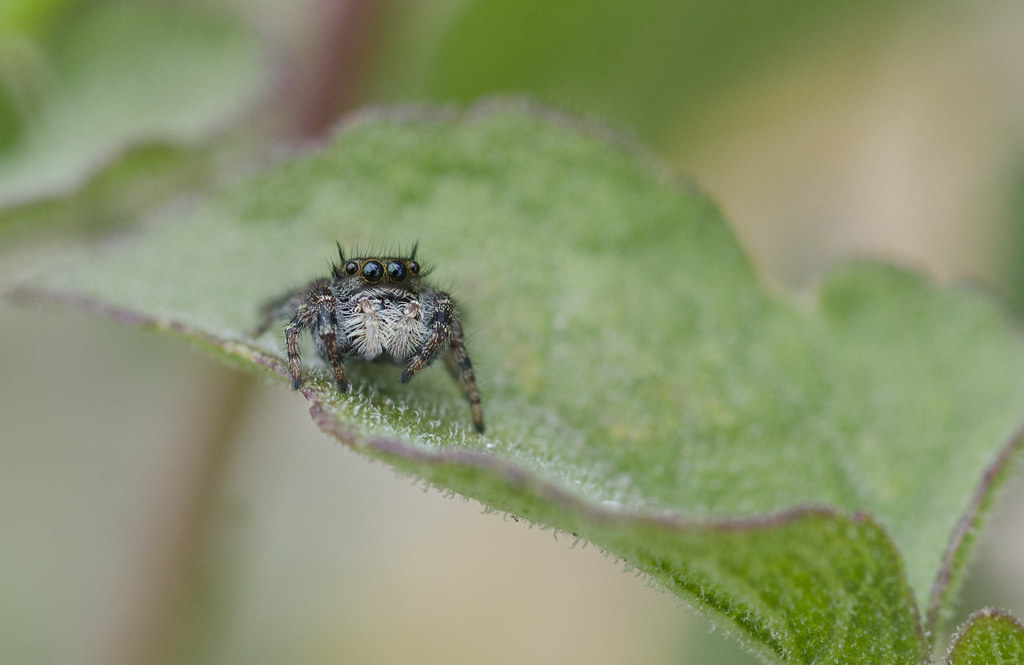
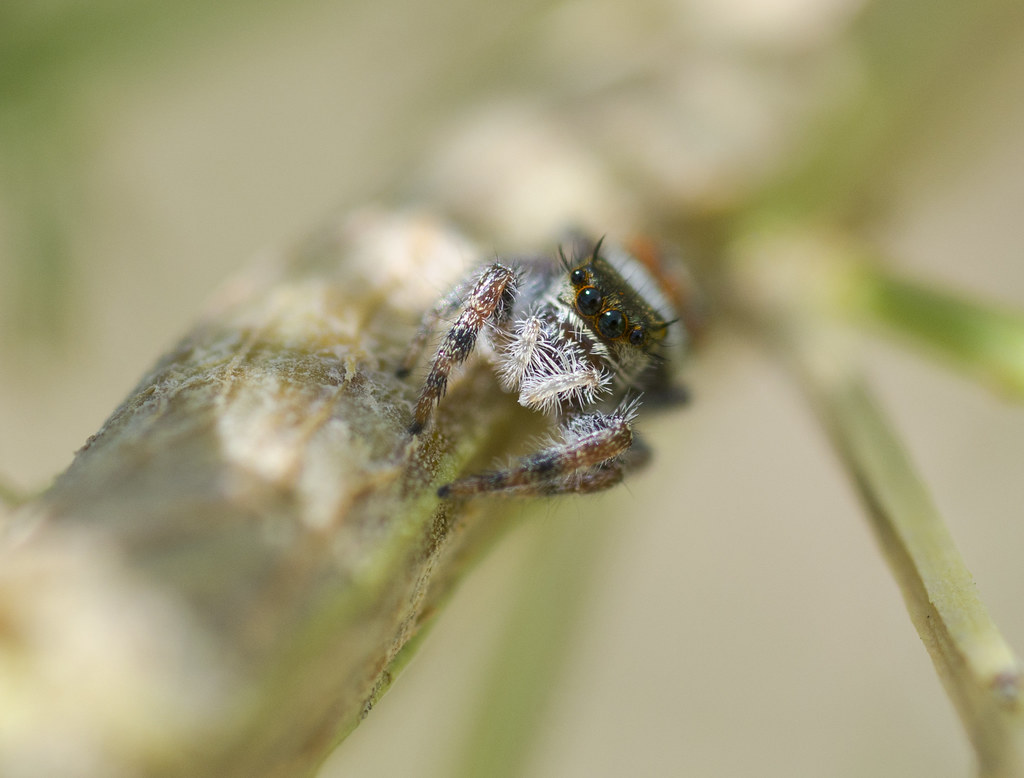
All three of these spiders are Phidippus sp., exact species is hard to determine.
I’ve especially enjoyed finding different Salticid species in our yard. One particular species, Colonus hesperus, is very abundant and seems to prefer hunting in the crossvine that covers the back wall. C. hesperus is a medium-sized jumping spider, and probably the largest non-Phidippus species I’ve seen here.

Sub-adult female C. hesperus feeding upon a male Metaphidippus chera. 
Sub-adult male C. hesperus.
The genus Habronattus is also plentiful. Pictured below are two different individuals that I believe to be female Habronattus oregonensis.


Another small but colorful Salticid that I see relatively often is Metaphidippus chera.

Metaphidippus chera, female. 
A jaunty M. chera male.
These photos only represent a handful of the jumping spiders I’ve observed in our yard and elsewhere! They are always a joy to see and interact with, as well as photograph.


