
The desert is in bloom! The bugs are making a big comeback, both insects and spiders (and everything in between), and you don’t have to go far to find all sorts of critters. It’s been a busy few weeks, and a lot of bug sightseeing has been confined to our yard and the surrounding area. There’s no shortage of things to see, though, if one looks hard enough.
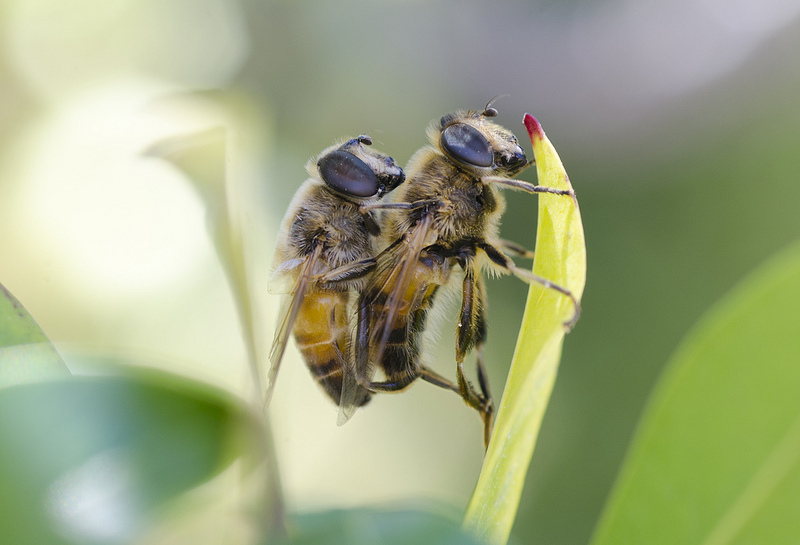
A couple of the ornamental trees in the backyard just finished up flowering, and an interesting variety of insects were attracted to their blooms. The most obvious pollinators were honeybees, and there were hundreds of them. It took a few days before I saw any native Hymenoptera. Also present were several species of flies, most of them Syrphid bee mimics. They tend to be highly territorial, and watching their antics is pretty entertaining.


Butterflies were also drawn to the flowering trees. Pictured above, a not-yet identified hairstreak and a Great Blue Streak (Atlides halesus).
Hiding amongst the foliage were also some predaceous bugs, waiting for the perfect moment to strike. I observed several assassin bugs and this well-camouflaged crab spider:

Other insects have been pretty active as of late. There was a major emergence of large craneflies, and they seem to be everywhere. I even observed a small jumping spider take one down — though it did go airborne for some time!

Despite the urban legends and old wives’ tales, craneflies aren’t giant mosquitoes (or “mosquito killers”) and they are absolutely harmless. They cannot bite, as adults lack mouthparts.
Another interesting bug that has been more visible lately are the webspinners, order Embiidina. When I first saw them last summer, I thought they were winged termites — superficially, the males do resemble them. Webspinners are an entirely different insect; they spin silk to make galleries under rocks and bark, and have the amazing ability to run backwards. Our most common species, Oligotoma nigra, is not native to the area, as it was imported with palm trees over a hundred years ago. However, they don’t seem to be pests; webspinners are detritivores and keep to themselves, and are a prey item for both invertebrates and lizards.

I’ve also seen a lot of spiders in the past couple of weeks, most notably jumping spiders. I’ll detail those in my next post.

 Bug Talk