
The past week has been warm and sunny, as the first day of spring draws near. Already, tiny leaves are starting to appear on the ocotillos, and in the higher elevations, wildflowers have begun to bloom! Catkins dangle from the willows that grow along riparian corridors, and mountain streams, fed by the snow melt, cascade down rocky furrows in the earth. Bugs of all kinds have become active, which is what I discovered on two separate trips to moderate elevations along the Mount Lemmon Highway.
The first trip, which I will detail in this post, was taken on March 10 to the Molino Canyon Vista pull-off. This particular location sits just above 4000′ along the Mount Lemmon Highway. What’s unique about Molino Canyon Vista is not only does it feature a riparian habitat, it also hosts a fascinating blend of desert and grassland plant species. Ferns, oaks, agaves, and prickly pears grow together! On this partly-sunny, 70°F day, butterflies of all kinds were active, as were bees, spiders, and plenty of true bugs. On the surface of the stream were at least two different species of water striders (Gerridae), and keeping an eye on them was this orb weaver, spinning its web mere millimeters from the water:
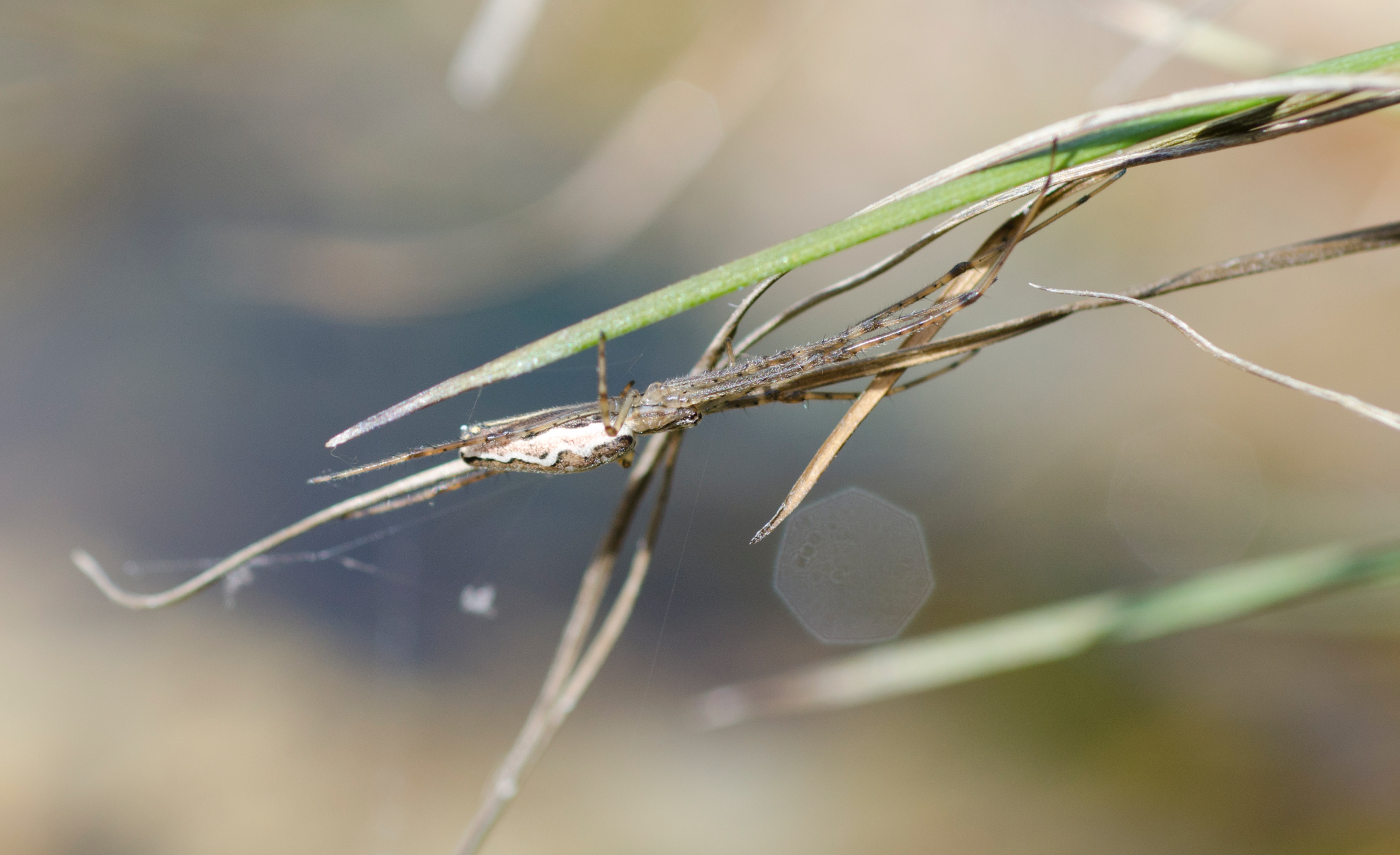
Once it realized my presence, the spider made a hasty retreat back to the nearby vegetation, and tried its best to imitate a blade of grass.
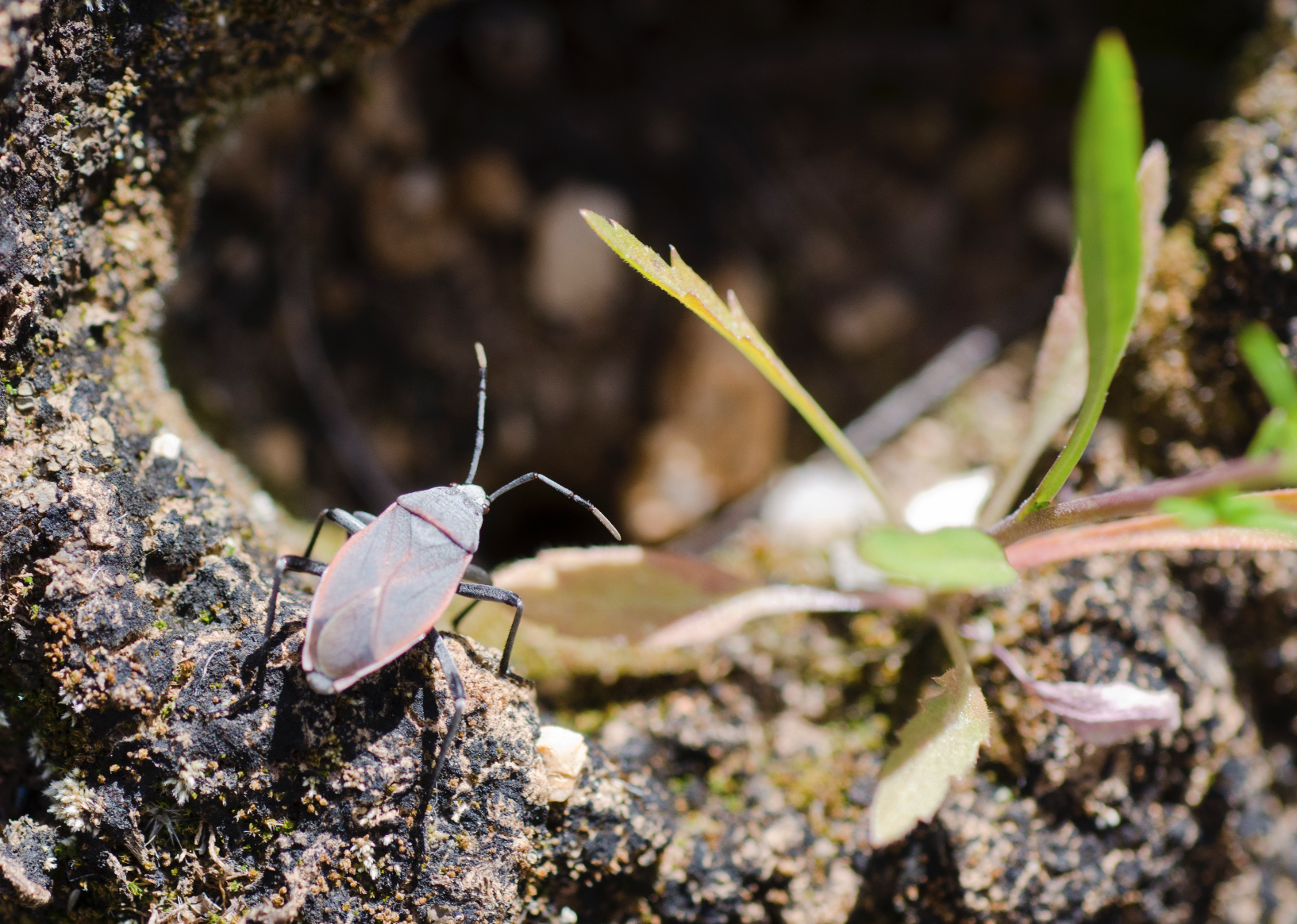
Water striders aside, the terrestrial true bugs were quite conspicuous: the warm temperature certainly did not hinder their speed, and they were difficult to photograph! Pictured below are a small milkweed bug (Lygaeus kalmii) and a bordered plant bug (Largus sp.). Both superficially resemble boxelder bugs, but are in a different superfamily.

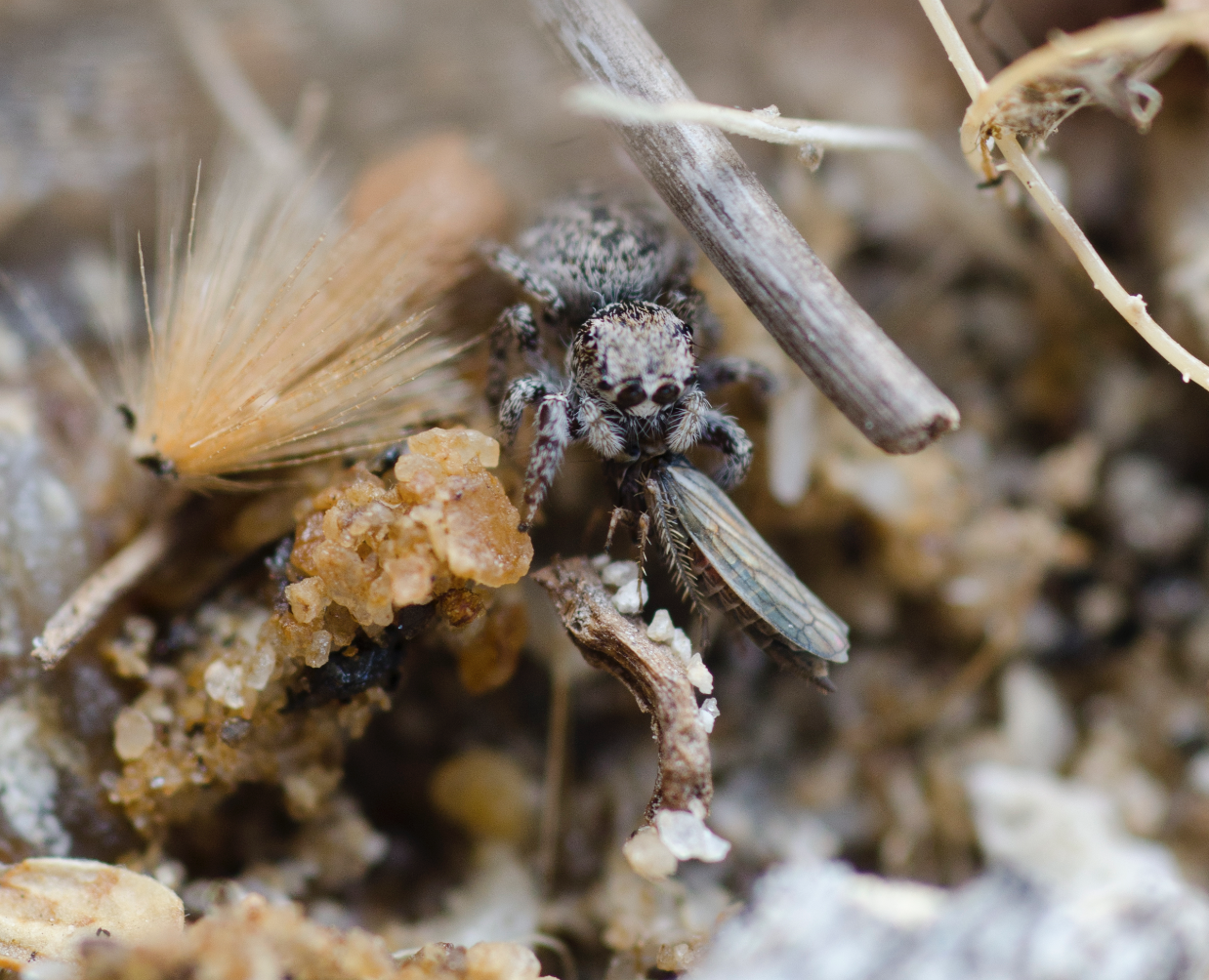
I also spotted a couple of small, tan jumping spiders hunting amongst the leaf litter by the stream, the second of which had just caught a leafhopper meal:

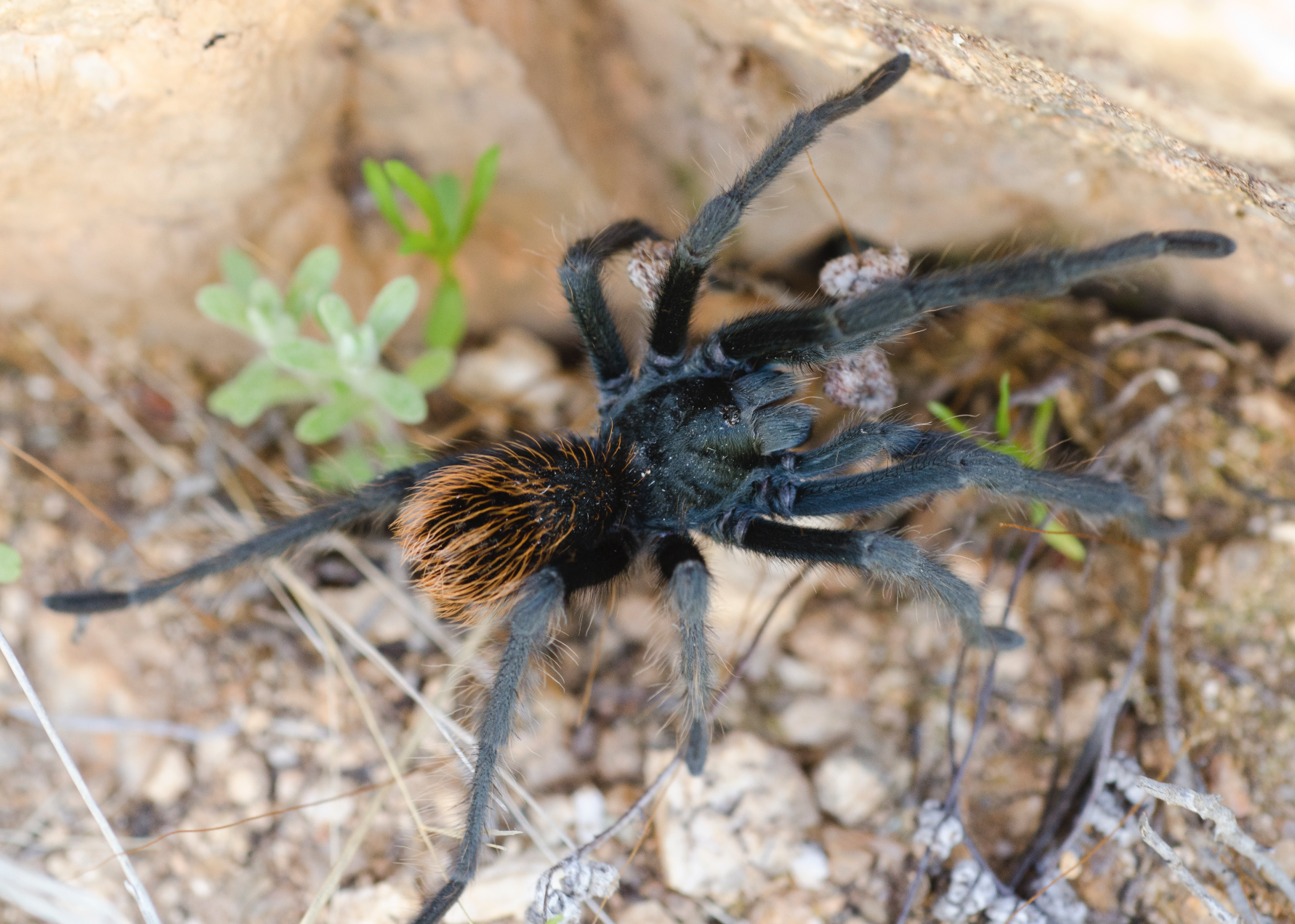
The big find of the day, though, was an adult male Aphonopelma madera! As far as tarantulas go, these ones are pretty small. I spotted him tiptoeing across a rocky part of the trail, and I decided that I really had to hold him. So, I put my hand on the ground and let him step onto me. Success! Our local tarantulas are very gentle, and are nothing to be scared about. After I got some good photographs, I let him continue on his way.
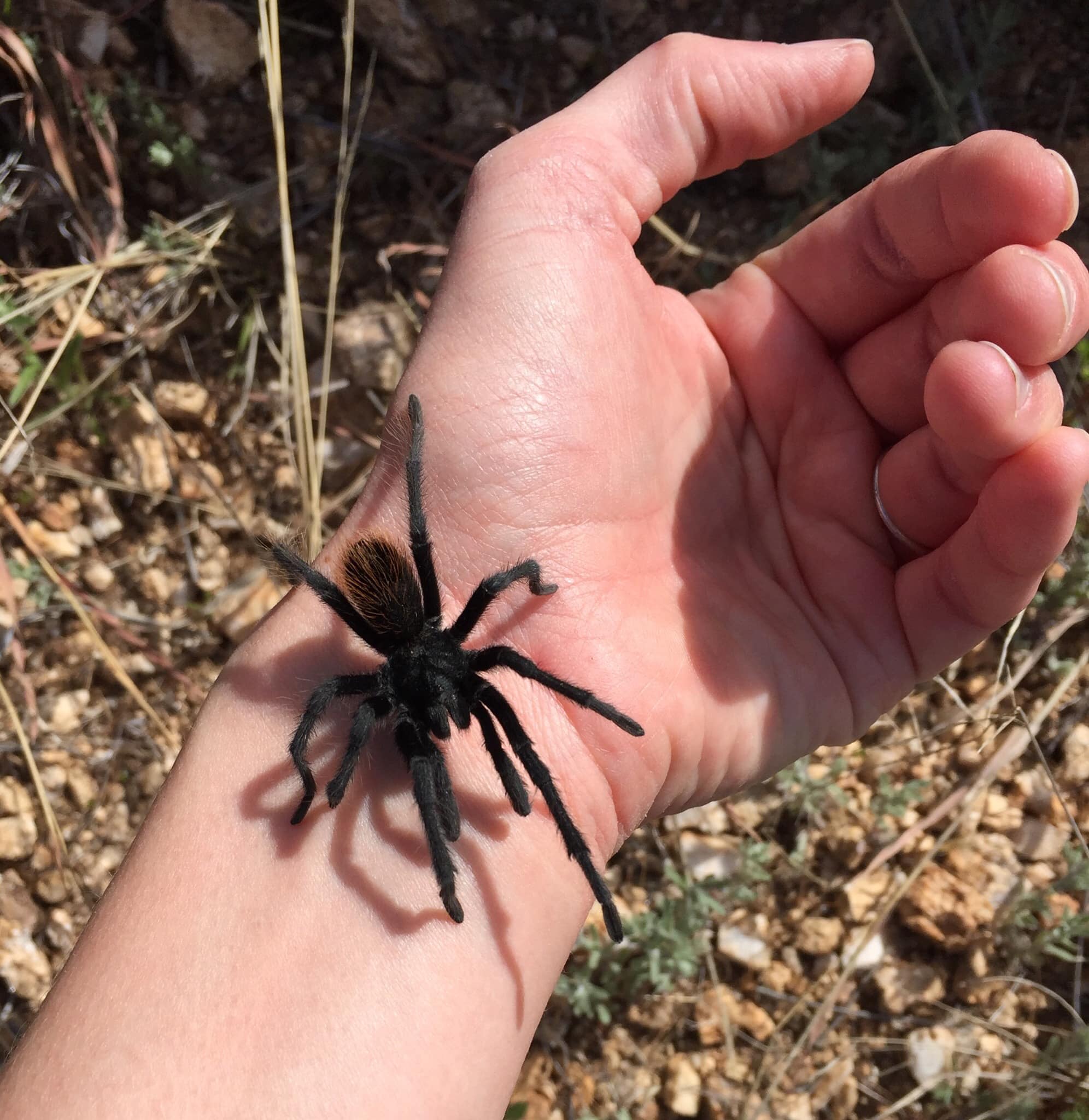
This tarantula species appears to be recently described, or at the very least, recently distinguished from a different species. As it turns out, tarantulas can be challenging to study — owing to the fact they are long-lived, secretive, and spend much of their lives underground!

 Bug Talk